
Why Spirituality?
This collection of spiritual innovation vignettes focuses on those projects and communities that support spiritual deepening—by which we mean that they enrich participants’ belonging, support their becoming, and nurture their experience of connecting with something beyond themselves.
The following four vignettes feature a variety of approaches to excellence in spiritual life: one is explicitly within a religious tradition, one is explicitly secular, and two find themselves at the edge (drawing on the heritage of spiritual lineage but positioning themselves outside of religious institutions). In this way, we strive to illustrate how the framing of spirituality as consisting of belonging, becoming, and beyond can work across religious and secular contexts.
1. The Cortège

What is it?
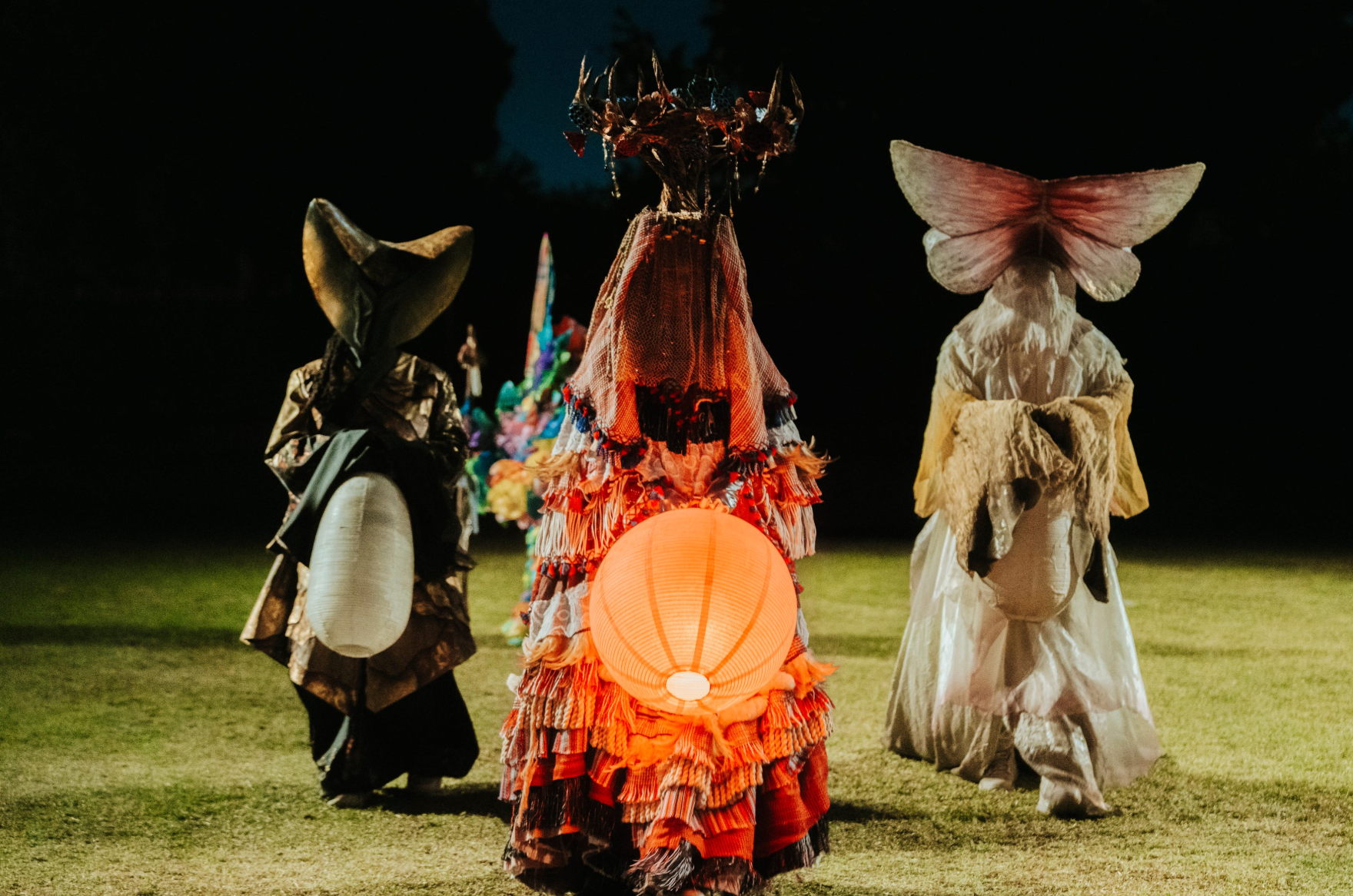
The Cortège was a large-scale participatory theatrical procession staged at the Los Angeles Equestrian Center in fall 2025. Created by a team led by experience designer Jeff Hull, it was framed as a “processional funeral for modernity,” blending mythic pageantry, dance, immersive sound, ritual symbolism, and public spectacle. Billed not as entertainment but as a ritual container, The Cortège became a public grieving space for a culture it described as fractured, disoriented, and spiritually starved.
Each performance gathered two to three hundred participants—called “passengers”—to sit on a grassy field wearing wireless headphones. What unfolded over ninety minutes was a wordless journey following an archetypal Everyman figure through birth, blessing, initiation, love, crisis, repression, death, and symbolic transcendence. The performance drew on shamanic costuming, Japanese battle dance, Bulgarian masks, and also featured new technologies including drones forming constellations overhead and robotic police dogs.
Witnesses to The Cortège were not passive observers. They submitted names of deceased loved ones before the experience, and these were then read aloud in an act of commemoration under a sky of star-like drones. At the conclusion of the experience, “passengers” were invited onto the field to dance with each other and the masked performers and robot dogs. Then, finally, they were guided into a tent to lay flowers on the body of the Everyman and share tea to integrate their ritualistic journey.
Where does it demonstrate excellence in spiritual depth?
The Cortège used a variety of processional arts to evoke ultimacy without the need for language. The only words used in the experience were the names of the dead, recited toward the end of the experience, and an opening song inspired by the poetry of Jalāl ad-Dīn Muḥammad Rūmī. The use of gesture, music, dance, and costuming was enormously effective at inviting the "passengers" into an interior experience of reflection that, in turn, connected them to a sense of something beyond themselves.
Evoking this sense of mystery and beauty, grief and loss, without determining the language for that meaning made The Cortège a particularly resonant experience for those who might be spiritually curious, or hesitant about doctrinal commitments or formal religious life. One example of this was the representation of divine presence through mythic figures in decorative costumes that suggested the presence of spiritual meaning without defining the exact contours of that mystery.
In an interview, Hull explained that this is “one of the issues with religion. We get caught up on language and the specifics of naming things. So when we go to that archetypal place, when we go to a wordless place, you get to apply your own ideas, values, and feelings without them being prescribed.”
What stands out in their approach to spirituality?
The Cortège was unusual in its creation of a public liturgy on a grand scale. Leveraging both immersive design techniques usually set aside for commercial entertainment and with ritual experiences usually led only by religious groups, this project operated at a significant aesthetic scale while evoking spiritual depth. Hull and his team spent months researching a variety of folk and religious traditions and partnered with creatives drawing on multiple cultures to create a ritual experience that was entirely new, wordless, yet rooted in ancient traditions.
Where do they struggle in their approach to spiritual depth?
Though The Cortège offered exceptional pathways into the “beyond” dimension of our framework for spirituality, it was a relatively individual experience. The headphones passengers wore, while emotionally immersive and allowing for a rich interior experience, also isolated participants from one another. To their credit, The Cortège did offer post-procession opportunities for conversation in the tent where tea was served after the conclusion of the performance, but this was optional. Structured shared practices—circle movement, guided call-and-response, or synchronized gesture—could have transformed the atmospheric belonging into more relational connection.
2. GatherFor

What is it?
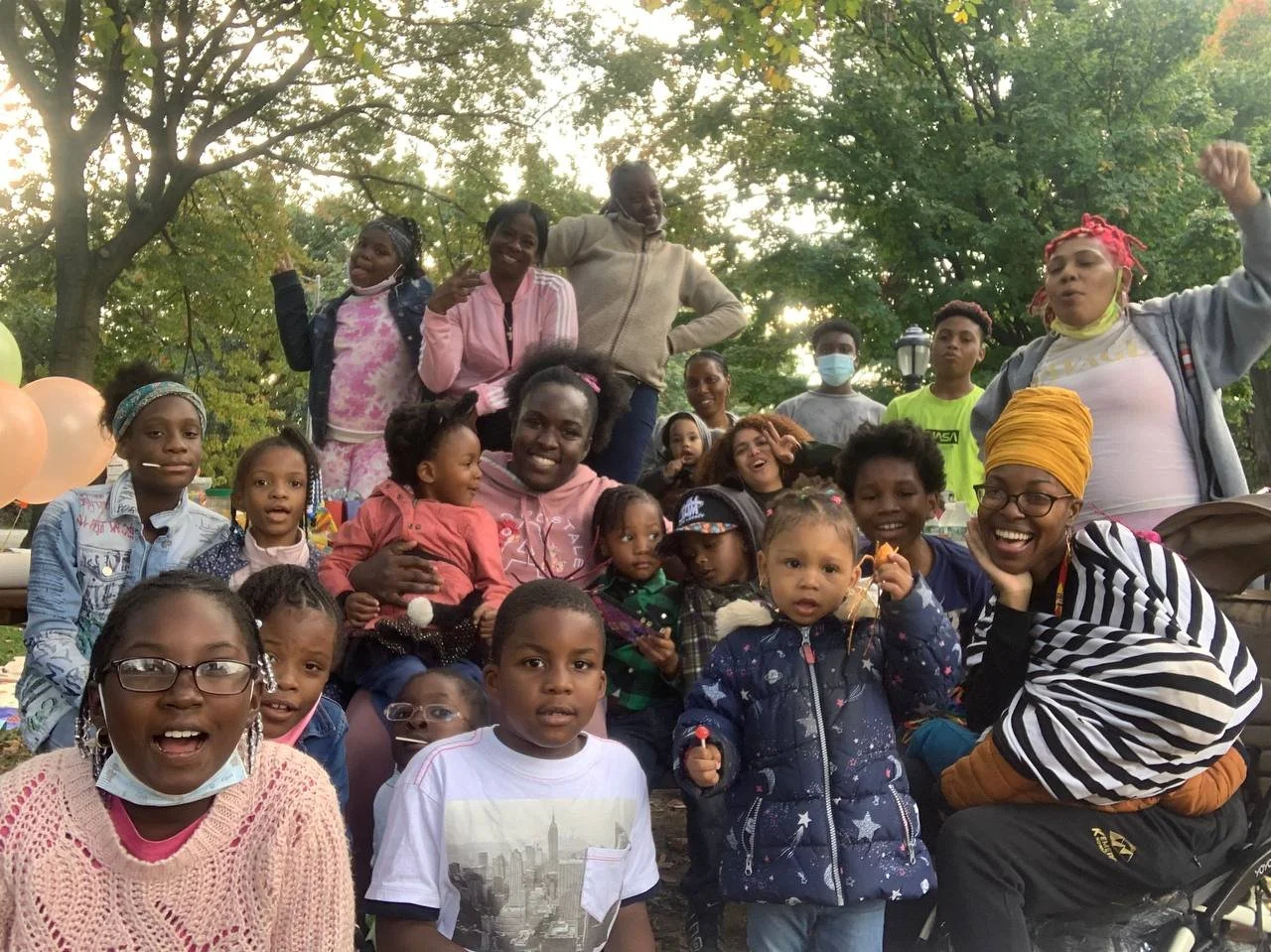
Brownsville in Brooklyn, NY is the neighborhood with the highest rate of crime per capita in the city. Residents have to navigate poor social housing and services that are a far cry from the well-heeled streets of Manhattan. Amidst this backdrop, GatherFor’s mission is to help neighborhoods like Brownsville become self-sufficient. They organize neighbors into teams of four to five to support one another like chosen family and then link these teams together to work towards building the neighborhood they want.
Through this experience of mutual aid, neighbors feel a deeper sense of belonging to their neighbors and the neighborhood they call home together.
The neighborhood teams meet every week online and share resources with each other, building a culture of mutual support. They pool funds to invest in one of the neighbors each month, and GatherFor supports each team with a budget of $300 a month. Though small (GatherFor has two part-time staff), this financial and relational investment has meant hundreds of Brownsville residents have had meaningful small changes made in their homes—from replaced light bulbs, groceries delivered by neighbors when sick—as well as being able to push for larger, systemic shifts. Most notably, GatherFor activated neighbors to get the attention of, and work with, New York City’s public housing agency to fix numerous issues that had been left unattended for years.
Where does it demonstrate excellence in spiritual depth?
GatherFor is a secular project. But the deep experience of belonging that neighbors cultivate speaks to two arenas of connection: to people and place. Indeed, because many families have lived in the neighborhood for generations, there’s also a sense of lineage that is strengthened through the relational work led by GatherFor staff and local groups.
Many neighbors feel isolated and disconnected from one another and the systems they have to navigate, and so it takes time for the teams to build trust in one another by sharing stories, showing up consistently for their team gatherings, and, as their relational capacity increases, to experience their own agency. GatherFor centers the dignity of each neighbor—supporting them to reconnect with their inherent worthiness. Importantly, this isn’t something that happens passively. Belonging is something neighbors contribute to, not just receive. That’s why the team has started encouraging neighbors to celebrate rituals like birthday parties as a way to lift up and celebrate each person involved in a team.
Teju Ravilochan, GatherFor’s founder, wanted to anchor belonging into the heart of the experience—not just to see it as a means to an end. The relationships are the point of the small groups, and so celebrating a birthday invites more personal story sharing about their lives beyond the group and living as neighbors. It gives a rhythm of celebration that reminds everyone of the bigger picture beyond the struggles of living in Brownsville.
What stands out in their approach to spirituality?
Importantly, GatherFor doesn’t use spiritual language to describe its work. But its focus on belonging, which forms one of our core pillars of spirituality, is central.
Initially, GatherFor sought to connect local residents with volunteers—often wealthier, whiter, and from outside the neighborhood. The hope was that this kind of relationship might widen access to opportunities for people in Brownsville. But, quickly, founder Ravilochan learned that this wasn’t the most helpful approach. That model of outside help only strengthened the sense of local residents having ‘less-than.’ He learned that reciprocity is an antidote to shame—and that the neighbors needed to give something to one another to make themselves feel valuable; to feel like they belonged. Now, this contribution-based model of belonging sits at the very heart of GatherFor’s approach.
Where do they struggle in their approach to spiritual depth?
One small group of neighbors supporting each other still falls woefully short of addressing the systemic lack of resources without which Brownsville residents struggle. GatherFor’s best efforts to nurture belonging cannot undo the cost-of-living crisis, poor public housing, and various mental and physical health challenges that prevent neighbors from fully engaging with GatherFor’s mission. That’s why even the small, monthly contribution of funds for each team is a meaningful contribution from GatherFor to support the small groups in their communal activities. Three hundred dollars makes a meeting a real community gathering because there’s food and drink to share; a moment of human connection is facilitated through practical needs being met.
3. Community of the Incarnation
What is it?
The Community of the Incarnation is a new monastic community that embodies and teaches engaged contemplative spirituality. The community’s practice democratizes the gifts of monastic spirituality and translates them into a form that can be lived in everyday life. Housed at the Mother Church of the Episcopal Diocese of Long Island, the community itself is dispersed geographically, with members across North America.
Vowed members of the community go through a comprehensive process of discernment, integral spiritual formation, monastic immersion, and in-depth study before being invited to take seasonal vows and commit to “ongoing conversion of life,” which eventually may result in permanent vows. Though welcoming a broad spectrum of belief, the community’s formation emphasizes deep practice and a shared understanding of the journey of spiritual life—especially the dry seasons of prayer life, when practitioners feel the absence of the divine or the futility of spiritual practice. They also emphasize the integration of contemplation with action and justice making, and a cultivation of aliveness, celebration, and joy as promises of spiritual life.

Where does it demonstrate excellence in spiritual depth?
The spiritual depth of the Community’s formation program is akin to traditional place-based monastic communities—with the same rigors of spiritual discipline and community discernment—making it a powerful example of ‘becoming,’ in Sacred Design Lab’s framework.
This starts with self-guided digital content and communal programming which offers structured opportunities to explore a deeper spiritual life. These programs attract thousands of participants over the year. With time, those feeling called can commit to an adapted version of the community’s Rule of Life that is adaptable to each person’s context, and they join monthly digital gatherings with fellow Companions to share in practice and conversation and an annual retreat. Numbers here are in the dozens. Finally, those with a deep commitment can make a formal vow. These members go through a multi-year, comprehensive formation experience before being invited to take seasonal vows.
What stands out in their approach to spirituality?
First, though housed within an Episcopal cathedral and having multiple leaders who are ordained members of the Episcopal Church, the community embraces participants and members regardless of their religious status. While they focus primarily on Christian contemplative practices, they include readings and teachings from multiple traditions—something co-founder Rev. Adam Bucko embodies in his own theological imagination.
Second, the community offers a formation path without sharing a geographic home. However, there is a boundary to the dispersed nature of participation. Having learned that synchronous practice and conversation is vital to the health of the community, members are welcomed only across North America because the timezone difference becomes prohibitive to full participation if vowed members are spread all over the world. All the offerings are in Eastern Time and sessions are not recorded to preserve the integrity of the live format and protect confidentiality.
Where do they struggle in their approach to spiritual depth?
The benefit of geographic distribution that allows a wider range of participation also comes with inevitable challenges. Vowed members gather for in-person retreats, but it remains to be seen how sustaining these relationships will be over time. The first cohort of about a dozen vowed members has emerged from their three-year formation program, and they now share a Rule of Life. But will this Rule and digital connection be strong enough to sustain them beyond the program of formation? Will virtual bonds sustain relationships sufficiently? Time will tell.
4. British Pilgrimage Trust

What is it?
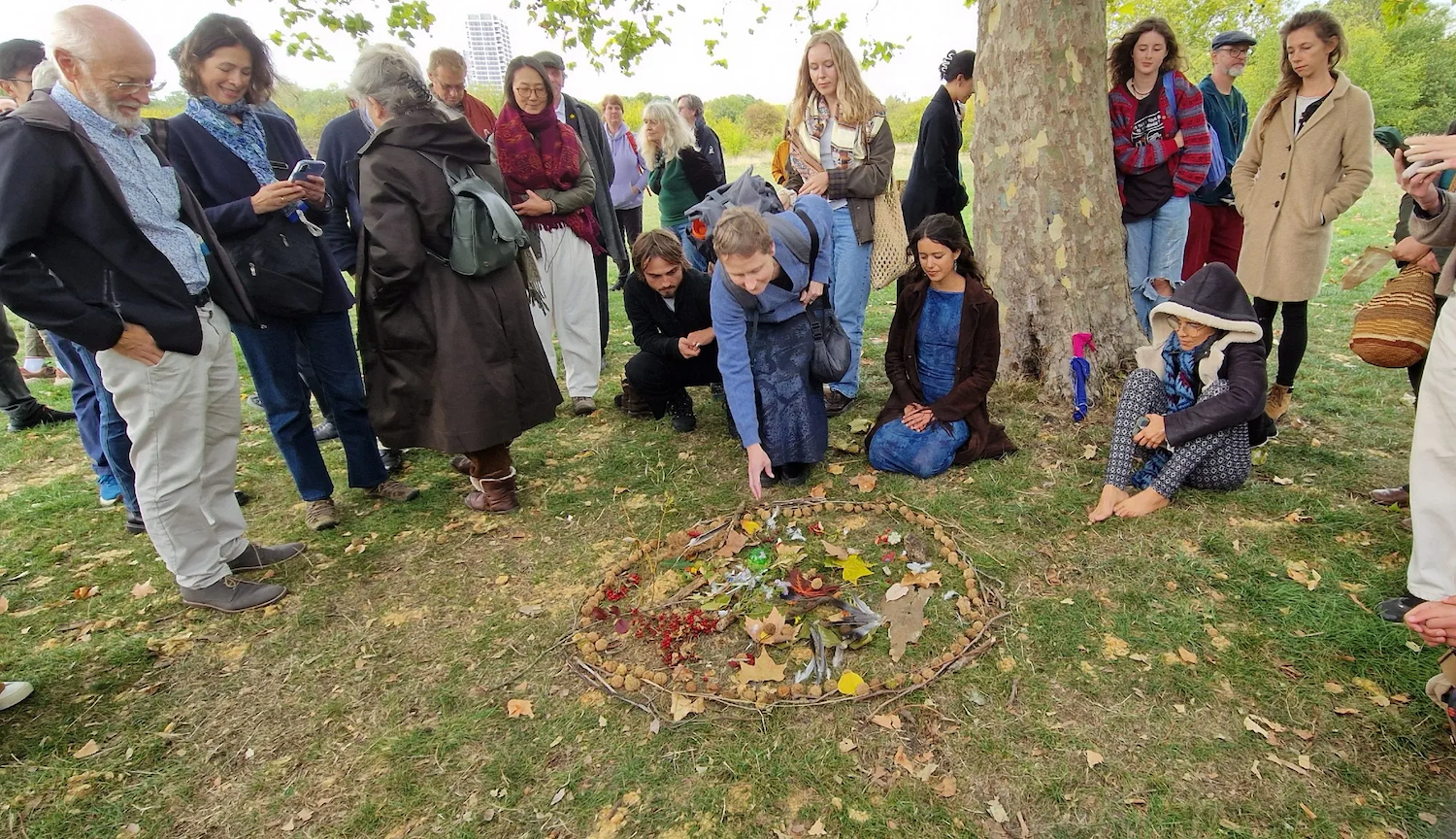
The British Pilgrimage Trust advances pilgrimage as a form of cultural heritage that promotes holistic wellbeing and is accessible to all. Founded with the intention to re-open the ancient pilgrimage routes of pre-Tudor Britain, it is designed for people of all faiths (and none) to engage Britain’s rich cultural heritage and natural beauty. The team both provides resources for independent pilgrims and organizes small cohorts of pilgrims on guided walking experiences. At the heart of the routes are cathedrals, ancient trees, river sources, holy wells, and standing stones—the invitation is for participants to embark on a personal walking journey to connect with the land, its ancestors, and the beauty of nature.
Where does it demonstrate excellence in spiritual depth?
In a broadly secular culture, where circa 6% of the public attends worship services regularly, The British Pilgrimage Trust has found an innovative way to draw people into connecting with something beyond themselves. The ancient routes, from Winchester to Canterbury, say, are both historically significant Christian pilgrimage routes and have stunning natural scenery through protected woodlands, coastal paths, and farmland. Other routes are intentionally drawn to embed sites of pre-Christian interest and other sites of folk culture—to ‘detoxify’ the concept of pilgrimage for an audience that is still highly suspicious of institutional religion. Participants are drawn into naming for themselves what they are seeking, through intention-setting exercises, and are instructed in optional rituals to include in their pilgrimage: carrying a contact relic, for example, or drinking the water at holy wells and river springs. Centering the practices of pilgrimage as the pathway to connect with spiritual depth makes the invitation both accessible and meaningful.
What stands out in their approach to spirituality?
Walking is, of course, core to the practice of pilgrimage—and the British Pilgrimage Trust has focused on increasing demand from potential pilgrims, but also working with small churches and other relevant ecclesial institutions to ensure there is a ‘supply’ of appropriate pilgrimage facilities en route. Many rural churches are often closed, meaning that pilgrims in search of shelter are stranded—needing to camp in the wild or pay for pricier accommodation. By creating the ‘Sanctuary Network,’ the team has facilitated a growing number of pilgrim sanctuaries (churches, but also village halls and sports pavilions) that make the pilgrimage route a little more comfortable. The logistical work of reimagining the use of these established parish and local civic spaces to facilitate spiritual travel is a striking example of innovating on top of existing infrastructure.
Where do they struggle in their approach to spiritual depth?
In part because of a long-standing rural/urban divide, Britain’s powerful and enduring dynamics of class and race, strong cultural barriers to accessing the countryside prove difficult to overcome. The ability to feel like one belongs in the countryside is therefore a class, racial, and disability justice issue that is not easily resolved.
Some attempts are already being made to combat this disparity. The Trust has highlighted the nationwide network of walking routes in national parks for people with limited mobility, including wheelchair users, families with strollers, and the visually impaired. And they have developed a series of urban pilgrimages, which are more easily accessible for city-dwellers than rural pilgrimages. In addition to these shorter journeys, virtual pilgrimages may be something to add into the range of offerings the British Pilgrimage Trust supports.
Further Reading
Ammerman, Nancy T., ed. Everyday Religion: Observing Modern Religious Lives. Oxford University Press, 2007. https://academic.oup.com/book/25763.
Barush, Kathryn R. Imaging Pilgrimage: Art as Embodied Experience. Bloomsbury Publishing, 2021. https://www.bloomsbury.com/us/imaging-pilgrimage-9781501335013/.
Chitwood, Ken, ed. Engaged Spirituality: Stories of Religious Resilience, Inspiration, and Pursuing the Common Good. Bloomsbury Academic, 2026. https://www.bloomsbury.com/us/engaged-spirituality-9781350563452/.
Coleman, Simon. Powers of Pilgrimage: Religion in a World of Movement. NYU Press, 2022. https://doi.org/10.18574/nyu/9780814717288.001.0001.
Lipsitz, George. “Conjuring Sacred Space in Gulf Coast Cities.” Journal of the American Academy of Religion 86, no. 2 (2018): 497–525. https://doi.org/10.1093/jaarel/lfx087.
Markofski, Wes. New Monasticism and the Transformation of American Evangelicalism. Oxford University Press, 2015. https://doi.org/10.1093/acprof:oso/9780190236496.001.0001.
Wuthnow, Robert. Creative Spirituality: The Way of the Artist. University of California Press, 2001.