
Why Leadership?
This collection of vignettes focuses on those projects and communities with successful leadership in place. By this, we mean they have particularly strong:
- Alignment: Leaders match in skillset and personal qualities what the project needs.
- Pipelines: Processes are in place to identify and support new leaders.
- Integrity: The approach to leadership matches the values being espoused.
We believe the best spiritual innovations are projects with strong leadership across all three arenas
1. OneTable

What is it?
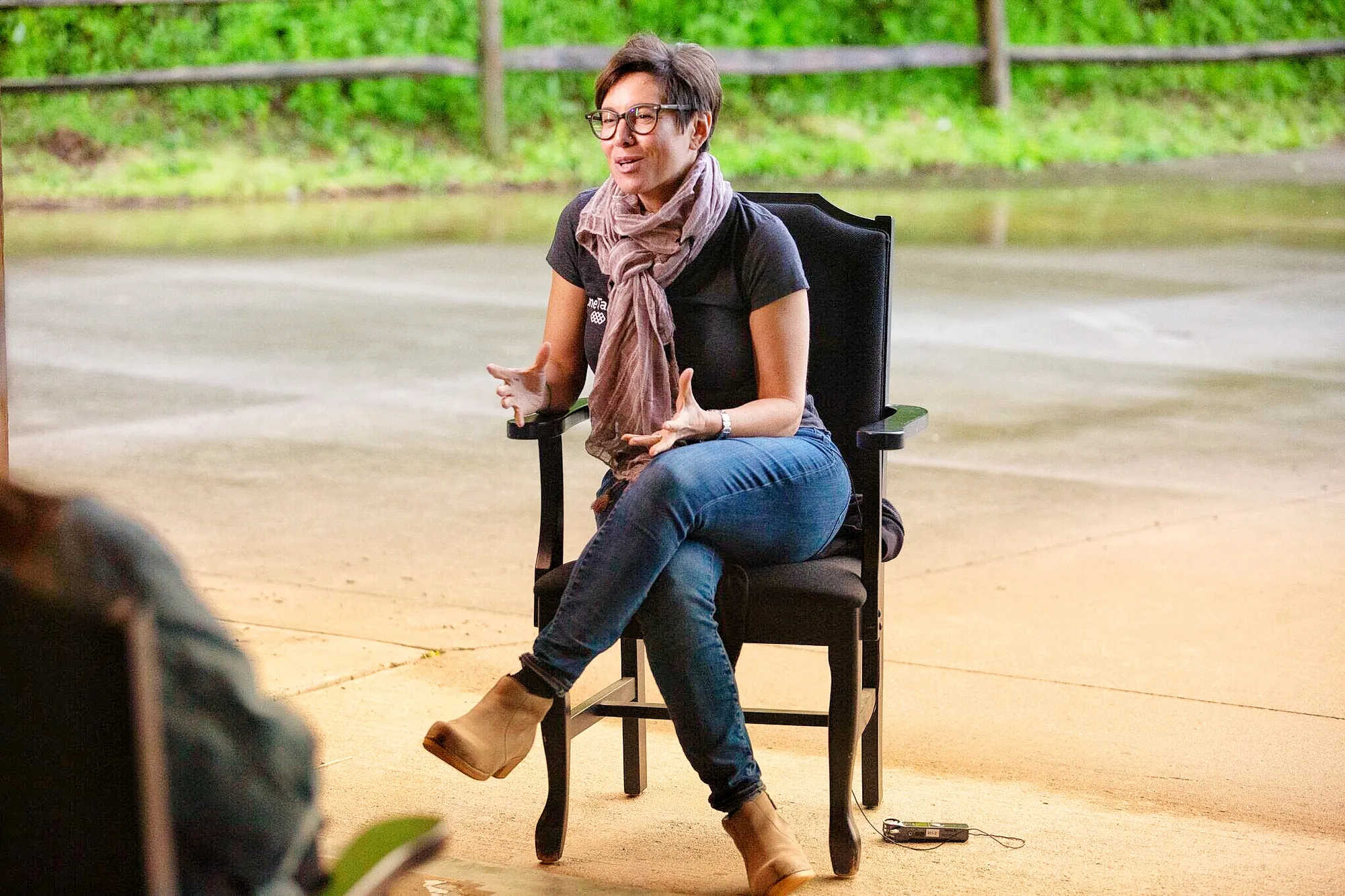
OneTable was founded in 2014 to make Shabbat dinner the highlight of young Jewish adults' week. Operating through a proprietary digital platform, OneTable supports peer hosts, mostly in their twenties and thirties, to open their homes to guests for Friday night Shabbat meals, providing resources, facilitation guides, and a financial subsidy to help cover the cost of food. By the end of Aliza Kline's decade as founding CEO, OneTable had hosted upwards of 180,000 dinners in 700+ cities and raised $65 million—growing to a staff of 60 people across 20 states and Canada, with an annual budget of $10-12 million and a financial reserve. In the final years of Kline’s leadership, OneTable expanded to serve adults over fifty through "OneTable Together" and licenses its platform to other organizations through "Powered by OneTable."
Across impact, scale, and managerial excellence, OneTable is an exemplary organization in the spiritual innovation landscape.
Where does it demonstrate excellence in leadership?
Among Kline's most significant contributions to OneTable was embedding human-centered design into the heart of the organization’s strategy and internal culture.
That meant that all new projects started with the user: not asking what programs to build but listening first to what young Jewish adults actually needed from a Friday night, and building outward from there. This orientation produced OneTable's rigorous culture of learning. They consistently track participation patterns, measure behavior change, and have also collaborated with scholars to study the impact of Shabbat on human flourishing. By the time Kline stepped down, design thinking became how the organization does its work. Once this change was accomplished, Kline felt that her work as a founding director was complete.
What stands out in their approach to leadership?
A successful founder like Kline could have continued her leadership for another decade. Her skillset was still aligned with the organization’s needs, her energy and creativity were high, and the trust she had from partners and funders was unparalleled. But she also had the self-awareness to recognize two key changes.
The first was institutional: the organization had crossed from startup mode into what she called "growth mode:" a strong board, a financial reserve, a diversified donor base, and a staff culture that no longer depended on her daily presence to function. The second was personal: she noticed in herself a growing pull toward the newest and least-developed of OneTable's three offerings, and a waning energy for the flagship program that constituted the core of the organization's work. "I observed in myself that I was drawn to newer initiatives," she explains. "And even though I have deep affection and pride in the core operation, it wasn't lighting me up in the same way." For the CEO of a mature organization, she recognized that shift in energy is a liability rather than an asset.
Kline’s previous leadership experience helped inform this decision. At another spiritual innovation organization, a change in her own personal circumstances prompted her to ask whether she needed the organization more than it needed her. That question reflects her wisdom and integrity as a leader. Following conversations with her board and other advisors, OneTable engaged an executive search firm for her replacement and she remained through the transition, committed to leaving things "as robust as I possibly can."
Where do they struggle in their approach to leadership?
Following her departure, OneTable will need to decide what the core of the organization’s strategy will be. Will they remain focused on supporting Shabbat dinners for young adults, expand their core product to other demographics, like the over-fifties, or expand their white-label platform revenue-generating work. The next CEO inherits a portfolio in which one offering is mature and two are still being cultivated. Whether a single leader can bring fresh eyes to all three simultaneously remains to be seen.
2. Church of the Saviour
What is it?
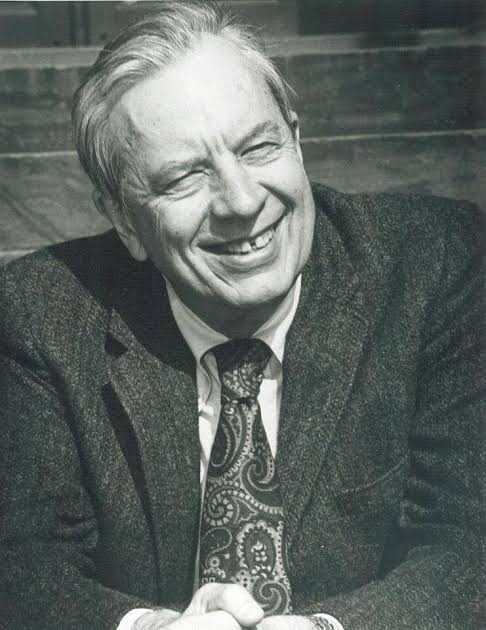
Gordon Cosby worked as a chaplain in the US Army during WWII and saw first-hand the shortcomings of institutional Christianity. As he ministered to a generation of young men facing death on the eve of D-Day, he realized how poorly equipped they were to confront their own mortality, and how inadequately their faith had formed them. He made a promise to God that if he survived, he would give himself to building new structures for spiritual growth.
Safely home in the United States, Gordon and his wife Mary Campbell Cosby began hosting a Sunday evening gathering in restaurants and borrowed rooms around Washington, DC. They wanted to create a different kind of church: multiracial, cross-class, ecumenical, and deeply formative. In 1947, with a small group of others, they made their first membership commitment as founders of the Church of the Saviour.
From the beginning, the Church of the Saviour stood out from its contemporaries because it treated every member as a minister. Therefore, becoming and remaining a member came with significant commitments to inner growth, relational growth, and growth in service. The fruits of these commitments are the Church’s defining legacy.
Today, Church of the Saviour is structured as a “scattered community” of small independent churches. Having come from a common family history and vision, the churches and other affiliated communities share similar, but not identical, practices and commitments. The community emphasizes that each is a unique local expression of the Body of Christ.
Where does it demonstrate excellence in leadership?
Spiritual formation is at the heart of all of Church of the Saviour’s activities. Though some forty nonprofits have emerged out of the church community, no one set out to build successful nonprofits. They designed for individuals’ spiritual growth in community, and the ministries came along as a consequence. Each new organization began when two or three people recognized the same specific pain in the world and felt compelled to respond, which is what the community calls a "call" with the quality of an "impossible yes." These calls are simple to receive, demanding to follow, and constitute a mission that will lead a small group into a lifetime of complex, unresolved work: working to alleviate homelessness, for example, or ensure that every child has the care they need. The city of Washington, DC has been changed by these mission groups that stayed small but demanded high commitment. Groups worked together for years, often decades, to create programs and, often, organizations, that served their mission.
Rather than growing one institution, the community multiplied itself, distributing leadership and accountability across a network each capable of generating its own missions.
This decision to stay small but deeply committed was in deliberate tension with the institutional pressures that push the central church community toward growth. Cosby refused speaking invitations and resisted expanding the central organization because he understood that the depth of spiritual formation the model required could not scale. In 1976 the community divided into eight independent communities as an act of trust in the leadership capacity across the community.
What stands out in their approach to leadership?
What is most remarkable about the Church of the Saviour is the coherence between its theory and its practice over nearly eight decades. The covenant that members made—daily prayer, scripture, weekly worship, proportional giving beginning at a tithe, contributing membership in a mission group, and peer accountability when they fell short—has kept commitment high and integrity strong.
Over time the community built sophisticated structures to support this coherence, which include the School of Christian Living, a multi-year intern membership process, weekly spiritual reports to a Spiritual Guide within each mission group, and distributed leadership roles. The concept of "unlimited liability" for one another—the expectation that members would stay with unresolved relationships rather than drifting away, and would leave openly rather than quietly—wove into the community's fabric a seriousness about commitment that most institutions shy away from.
Where do they struggle in their approach to leadership?
The strength of depth in the community has come at the cost of breadth. The leadership model within the Church of the Saviour is demanding and many either cannot maintain this level of commitment or are not initially attracted to it. The multi-year process of intern membership, the demands of the covenant, and the discipline expected of every member are not entry points for the casually curious. The community has never been large and has never tried to be. But in a moment of widespread spiritual hunger and steep institutional decline, the model of small groups working together within a wider network offers a powerful, if not well-known, model for religious institutions across the board.
The Spring 2026 issue of the Church of the Saviour’s quarterly journal Callings, marking fifty years since the 1976 restructuring, reflects honestly on a community navigating significant transitions. One of the most successful ministries, The Potter's House, has entered a period of discernment about its future. Some of the communities are thriving while others are moving toward closure. What the next generation of Church of the Saviour looks like remains to be seen.
3. Forum for Theological Exploration

What is it?
The Forum for Theological Exploration (FTE) is a leadership incubator based in Decatur, Georgia. Founded in 1954 to address a shortage of trained clergy during a period of national religious revival, it has long focused on providing fellowship support to potential leaders in Christian communities. Notably, FTE has committed to both excellence and diversity in theological leadership development, with a strong emphasis on supporting young leaders of color.
FTE provides fellowships, grants, hosts events, and offers mentorship and other resources to help young adults, graduate students, pastors, and others discern Christian vocations. Its reach is extensive. It has partnered with more than 4,000 institutions and it produces podcasts, books, and a digital platform for Christian social entrepreneurs.
Where does it demonstrate excellence in leadership?
FTE approaches leadership as a pipeline, investing in people before they occupy positions of power. Its model begins with young adults exploring their vocations, extends to doctoral students preparing for careers in ministry or theological education, and includes the church leaders and organizations that will eventually employ them. Along the way, it actively works to diversify that pipeline and build community.
FTE’s work with young adults focuses on discernment, specifically their exploration of Christian leadership. Since 2019, it has marshaled grants, retreats, mentoring, courses, and gatherings to support and connect nearly 1,900 young adults who are exploring Christian callings. FTE’s pipeline continues into doctoral education. Since 1968, it has helped to fund theological graduate study, first with its African American Doctoral Fellowships and then, in 1976, with its Hispanic Doctoral Fellowships. To date, these expanded programs have supported roughly 2,000 scholars while also growing their networks, facilitating professional development, amplifying historically underrepresented voices, and expanding Christian communities.
In a particularly valuable move, FTE recognizes that leaders benefit from contexts that are prepared to receive them. So, their work also integrates organizational partners, helping them develop more diverse, equitable, and inclusive spaces in which to welcome these new leaders.
What stands out in their approach to leadership?
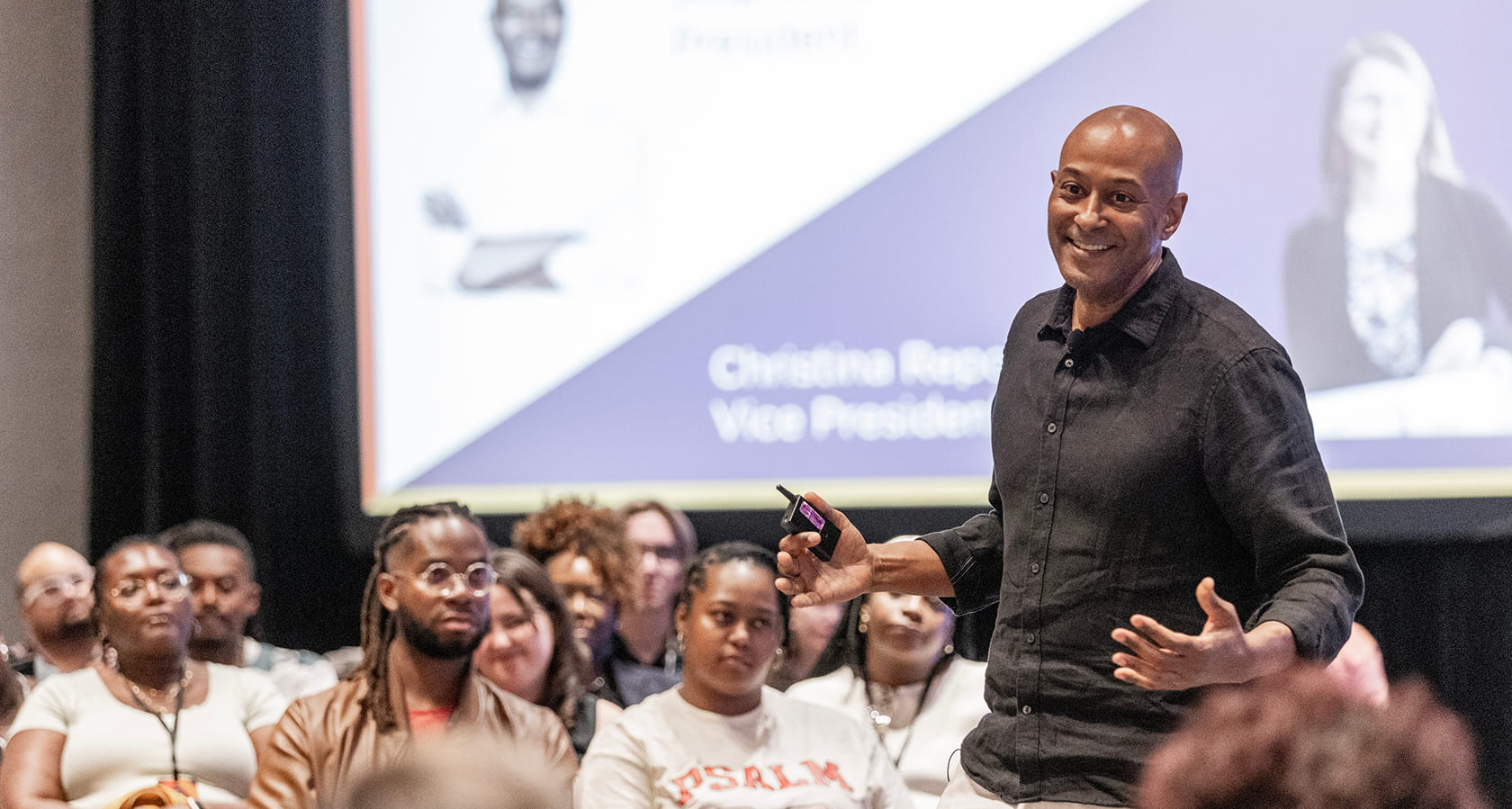
FTE practices what it preaches by putting a commitment to diversity at the heart of their own organizational strategy and management. When Stephen Lewis took the helm of FTE in 2011, he launched an 18-month listening tour to see where the organization’s values and practices could be more closely aligned. Amid financial setbacks and a shifting social context, he knew things had to change. A key insight emerged: FTE needed to work beyond conventional church structures. Lewis’ listening tour led to substantial organizational reforms including closing programs that had fulfilled their initial purpose and creating about 40 new initiatives between 2012-2023.
Where do they struggle in their approach to leadership?
FTE has weathered significant challenges over the years, including periods of financial instability, governance issues, low morale, and accusations of cultural insensitivity. Most recently, the organization underwent downsizing due to unfavorable economic conditions. Yet FTE has not shied away from this complicated history. Its website openly addresses the organization’s administrative flux, organizational struggles, and difficult seasons, providing a concrete example of integrity and transparency in action.
4. Valley & Mountain

What is it?
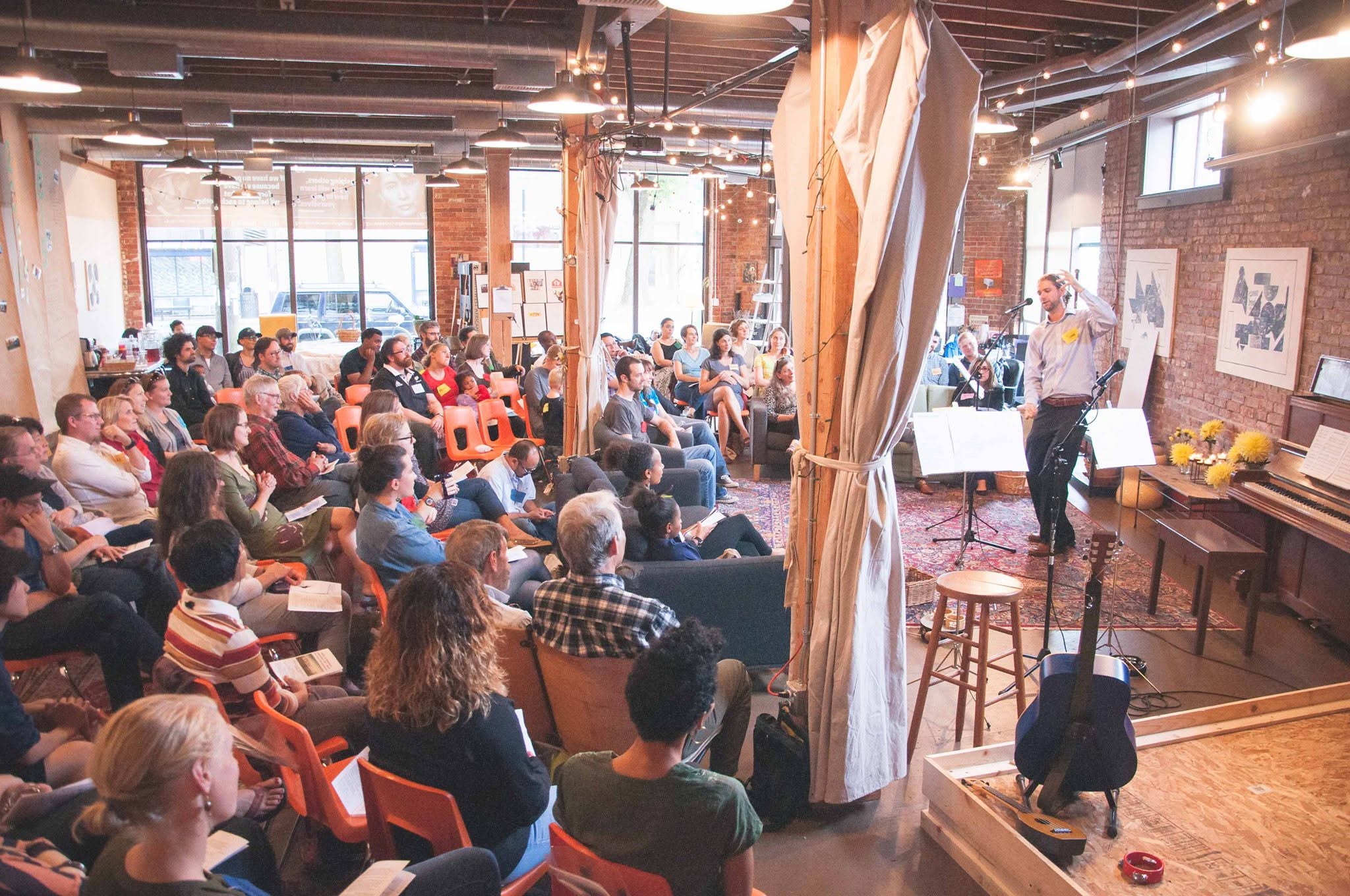
Valley and Mountain (V&M) is a progressive, LGBTQ-affirming, United Methodist-rooted community in Seattle's Rainier Valley, which is one of the most racially and economically diverse neighborhoods in the Pacific Northwest. Founded in 2010 by Rev. John Helmiere, V&M has grown over fifteen years from a handful of people at a backyard cookout into a worshipping community of several hundred. It gathers weekly for what it calls "Celebrations," a deliberate renaming of the Sunday service to signal why people come. The community is organized around three commitments: Deep Listening (a school for exploring inward), Creative Liberation (a launchpad for engaging outward with justice), and Radical Hospitality (community without requiring conformity). Though it remains affiliated with the United Methodist Church, it operates with significant theological and structural independence, and is currently led by three part-time pastors.
V&M's physical home has shifted over the years from a community center, to an Orthodox Jewish school, to the Hillman City Collaboratory—a social change incubator co-founded by V&M. The vision was always to be deeply integrated into the neighborhood, so moving from one place to another helped build connections across the local area. But even more important was the radical hospitality offered to neighbors—particularly those who live on the streets. This has meant that V&M is a genuinely cross-class community, where people who’d not usually interact have more of a level playing field on which to establish connections.
Further, V&M has been especially active in supporting immigration solidarity work, partnered with port truck drivers on labor organizing projects, and hosts the Resistance Choir—made of church members and other local residents. This work stems from V&M’s commitment to treat justice as inseparable from Sunday worship.
Where does it demonstrate excellence in leadership?
Though founded by an Ivy-League-educated white Methodist pastor, V&M has demonstrated a robust pipeline for leadership development, particularly across race and class. Its Roots Cohort is a dedicated spiritual development and formation program that supports members stepping into leadership, and it also offers pastoral apprenticeships and invites those apprentices to join more established leaders at conferences and other professional development opportunities. When V&M doubled in size in 2016 and launched a second Sunday service, it began laying groundwork for a new church to form elsewhere in Seattle—treating its own growth as an occasion to generate new leadership rather than simply expand its own footprint.
What stands out in their approach to leadership?
The most distinctive feature of V&M's approach to leadership is the way it has named and framed the work itself. The language of "creative liberation" and "table turning"—drawn from the gospel image of Jesus overturning the money changers' tables in the Temple—reframes justice work not as activism added onto spiritual life but as an expression of it, rooted in its tradition and accountable to it. This kind of theologically grounded, imaginative framing for justice work helps V&M maintain coherence between its spiritual and political commitments in a way that many congregations find difficult to sustain.
These linguistic choices are visible throughout V&M’s work. From the beginning, Rev. John Helmiere spent his first six months in the Rainier Valley calling himself a "Minister of Listening." He was not planting a church, but was instead attending to what was already there, learning the neighborhood before making any claims on it. He calls himself a convener rather than a founder, which further locates authority in the community rather than in an individual. After twelve years of leadership, his transition out of the organization was another moment in which the community chose an unusual path. Rather than hiring a single new pastoral leader, three part-time pastors joined the staff, each with deep independent expertise and community roots.
Where do they struggle in their approach to leadership?
The challenge V&M faces are twofold. Will the culture of leadership formation and shared authority remain now that the leadership that produced it has changed? And how will the distance between the community and the United Methodist Church be held together without a UMC-ordained pastor? The UMC's approach to clergy appointment, ordination, and accountability sits uneasily alongside a community that has deliberately tried to move from being founder-led to being congregation-led, and that seeks deeper community-wide formation rather than congregational growth.
Further Reading
Benac, Dustin D. Adaptive Church: Collaboration and Community in a Changing World. Baylor University Press, 2022.
Bramadat, Paul, Patricia O’Connell Killen, and Sarah Wilkins-Laflamme, eds. Religion at the Edge: Nature, Spirituality, and Secularity in the Pacific Northwest. University of British Columbia Press, 2022.
Chaves, Mark, and Anna Holleman. American Religion: Contemporary Trends - Third Edition. Princeton University Press, 2027.
Gross, Aaron S., Jody Myers, and Jordan D. Rosenblum, eds. Feasting and Fasting: The History and Ethics of Jewish Food. New York University Press, 2019.
Lewis, Stephen, and Kimberly R. Daniel. A Way Out of No Way: An Approach to Christian Innovation. The Forum for Theological Exploration, 2022.
Lewis, Stephen, Matthew Wesley Williams, and Dori Grinenko Baker. Another Way: Living and Leading Change on Purpose. Chalice Press, 2020.
O’Connor, Elizabeth. Call to Commitment: The Story of the Church of the Saviour, Washington, D.C. Harper & Row Publishers, 1963.
O’Connor, Elizabeth. Journey Inward, Journey Outward. HarperCollins, 1975.
Stein, Lori. Let’s Eat: Jewish Food and Faith. Rowman & Littlefield, 2018.
Why Leadership?
This collection of vignettes focuses on those projects and communities with successful leadership in place. By this, we mean they have particularly strong:
- Alignment: Leaders match in skillset and personal qualities what the project needs.
- Pipelines: Processes are in place to identify and support new leaders.
- Integrity: The approach to leadership matches the values being espoused.
We believe the best spiritual innovations are projects with strong leadership across all three arenas
1. OneTable
What is it?
OneTable was founded in 2014 to make Shabbat dinner the highlight of young Jewish adults' week. Operating through a proprietary digital platform, OneTable supports peer hosts, mostly in their twenties and thirties, to open their homes to guests for Friday night Shabbat meals, providing resources, facilitation guides, and a financial subsidy to help cover the cost of food. By the end of Aliza Kline's decade as founding CEO, OneTable had hosted upwards of 180,000 dinners in 700+ cities and raised $65 million—growing to a staff of 60 people across 20 states and Canada, with an annual budget of $10-12 million and a financial reserve. In the final years of Kline’s leadership, OneTable expanded to serve adults over fifty through "OneTable Together" and licenses its platform to other organizations through "Powered by OneTable."
Across impact, scale, and managerial excellence, OneTable is an exemplary organization in the spiritual innovation landscape.
Where does it demonstrate excellence in leadership?
Among Kline's most significant contributions to OneTable was embedding hcentered design into the heart of the organization’s strategy and internal culture.
That meant that all new projects started with the user: not asking what programs to build but listening first to what young Jewish adults actually needed from a Friday night, and building outward from there. This orientation produced OneTable's rigorous culture of learning. They consistently track participation patterns, measure behavior change, and have also collaborated with scholars to study the impact of Shabbat on human flourishing. By the time Kline stepped down, design thinking became how the organization does its work. Once this change was accomplished, Kline felt that her work as a founding director was complete.
What stands out in their approach to leadership?
A successful founder like Kline could have continued her leadership for another decade. Her skillset was still aligned with the organization’s needs, her energy and creativity were high, and the trust she had from partners and funders was unparalleled. But she also had the self-awareness to recognize two key changes.
The first was institutional: the organization had crossed from startup mode into what she called "growth mode:" a strong board, a financial reserve, a diversified donor base, and a staff culture that no longer depended on her daily presence to function. The second was personal: she noticed in herself a growing pull toward the newest and least-developed of OneTable's three offerings, and a waning energy for the flagship program that constituted the core of the organization's work. "I observed in myself that I was drawn to newer initiatives," she explains. "And even though I have deep affection and pride in the core operation, it wasn't lighting me up in the same way." For the CEO of a mature organization, she recognized that shift in energy is a liability rather than an asset.
Kline’s previous leadership experience helped inform this decision. At another spiritual innovation organization, a change in her own personal circumstances prompted her to ask whether she needed the organization more than it needed her. That question reflects her wisdom and integrity as a leader. Following conversations with her board and other advisors, OneTable engaged an executive search firm for her replacement and she remained through the transition, committed to leaving things "as robust as I possibly can."
Where do they struggle in their approach to leadership?
Following her departure, OneTable will need to decide what the core of the organization’s strategy will be. Will they remain focused on supporting Shabbat dinners for young adults, expand their core product to other demographics, like the over-fifties, or expand their white-label platform revenue-generating work. The next CEO inherits a portfolio in which one offering is mature and two are still being cultivated. Whether a single leader can bring fresh eyes to all three simultaneously remains to be seen.
2. Church of the Saviour
What is it?
Gordon Cosby worked as a chaplain in the US Army during WWII and saw first-hand the shortcomings of institutional Christianity. As he ministered to a generation of young men facing death on the eve of D-Day, he realized how poorly equipped they were to confront their own mortality, and how inadequately their faith had formed them. He made a promise to God that if he survived, he would give himself to building new structures for spiritual growth.
Safely home in the United States, Gordon and his wife Mary Campbell Cosby began hosting a Sunday evening gathering in restaurants and borrowed rooms around Washington, DC. They wanted to create a different kind of church: multiracial, cross-class, ecumenical, and deeply formative. In 1947, with a small group of others, they made their first membership commitment as founders of the Church of the Saviour.
From the beginning, the Church of the Saviour stood out from its contemporaries because it treated every member as a minister. Therefore, becoming and remaining a member came with significant commitments to inner growth, relational growth, and growth in service. The fruits of these commitments are the Church’s defining legacy.
Today, Church of the Saviour is structured as a “scattered community” of small independent churches. Having come from a common family history and vision, the churches and other affiliated communities share similar, but not identical, practices and commitments. The community emphasizes that each is a unique local expression of the Body of Christ.
Where does it demonstrate excellence in leadership?
Spiritual formation is at the heart of all of Church of the Saviour’s activities. Though some forty nonprofits have emerged out of the church community, no one set out to build successful nonprofits. They designed for individuals’ spiritual growth in community, and the ministries came along as a consequence. Each new organization began when two or three people recognized the same specific pain in the world and felt compelled to respond, which is what the community calls a "call" with the quality of an "impossible yes." These calls are simple to receive, demanding to follow, and constitute a mission that will lead a small group into a lifetime of complex, unresolved work: working to alleviate homelessness, for example, or ensure that every child has the care they need. The city of Washington, DC has been changed by these mission groups that stayed small but demanded high commitment. Groups worked together for years, often decades, to create programs and, often, organizations, that served their mission.
Rather than growing one institution, the community multiplied itself, distributing leadership and accountability across a network each capable of generating its own missions.
This decision to stay small but deeply committed was in deliberate tension with the institutional pressures that push the central church community toward growth. Cosby refused speaking invitations and resisted expanding the central organization because he understood that the depth of spiritual formation the model required could not scale. In 1976 the community divided into eight independent communities as an act of trust in the leadership capacity across the community.
What stands out in their approach to leadership?
What is most remarkable about the Church of the Saviour is the coherence between its theory and its practice over nearly eight decades. The covenant that members made—daily prayer, scripture, weekly worship, proportional giving beginning at a tithe, contributing membership in a mission group, and peer accountability when they fell short—has kept commitment high and integrity strong.
Over time the community built sophisticated structures to support this coherence, which include the School of Christian Living, a multi-year intern membership process, weekly spiritual reports to a Spiritual Guide within each mission group, and distributed leadership roles. The concept of "unlimited liability" for one another—the expectation that members would stay with unresolved relationships rather than drifting away, and would leave openly rather than quietly—wove into the community's fabric a seriousness about commitment that most institutions shy away from.
Where do they struggle in their approach to leadership?
The strength of depth in the community has come at the cost of breadth. The leadership model within the Church of the Saviour is demanding and many either cannot maintain this level of commitment or are not initially attracted to it. The multi-year process of intern membership, the demands of the covenant, and the discipline expected of every member are not entry points for the casually curious. The community has never been large and has never tried to be. But in a moment of widespread spiritual hunger and steep institutional decline, the model of small groups working together within a wider network offers a powerful, if not well-known, model for religious institutions across the board.
The Spring 2026 issue of the Church of the Saviour’s quarterly journal Callings, marking fifty years since the 1976 restructuring, reflects honestly on a community navigating significant transitions. One of the most successful ministries, The Potter's House, has entered a period of discernment about its future. Some of the communities are thriving while others are moving toward closure. What the next generation of Church of the Saviour looks like remains to be seen.
3. Forum for Theological Exploration
What is it?
The Forum for Theological Exploration (FTE) is a leadership incubator based in Decatur, Georgia. Founded in 1954 to address a shortage of trained clergy during a period of national religious revival, it has long focused on providing fellowship support to potential leaders in Christian communities. Notably, FTE has committed to both excellence and diversity in theological leadership development, with a strong emphasis on supporting young leaders of color.
FTE provides fellowships, grants, hosts events, and offers mentorship and other resources to help young adults, graduate students, pastors, and others discern Christian vocations. Its reach is extensive. It has partnered with more than 4,000 institutions and it produces podcasts, books, and a digital platform for Christian social entrepreneurs.
Where does it demonstrate excellence in leadership?
FTE approaches leadership as a pipeline, investing in people before they occupy positions of power. Its model begins with young adults exploring their vocations, extends to doctoral students preparing for careers in ministry or theological education, and includes the church leaders and organizations that will eventually employ them. Along the way, it actively works to diversify that pipeline and build community.
FTE’s work with young adults focuses on discernment, specifically their exploration of Christian leadership. Since 2019, it has marshaled grants, retreats, mentoring, courses, and gatherings to support and connect nearly 1,900 young adults who are exploring Christian callings. FTE’s pipeline continues into doctoral education. Since 1968, it has helped to fund theological graduate study, first with its African American Doctoral Fellowships and then, in 1976, with its Hispanic Doctoral Fellowships. To date, these expanded programs have supported roughly 2,000 scholars while also growing their networks, facilitating professional development, amplifying historically underrepresented voices, and expanding Christian communities.
In a particularly valuable move, FTE recognizes that leaders benefit from contexts that are prepared to receive them. So, their work also integrates organizational partners, helping them develop more diverse, equitable, and inclusive spaces in which to welcome these new leaders.
What stands out in their approach to leadership?
FTE practices what it preaches by putting a commitment to diversity at the heart of their own organizational strategy and management. When Stephen Lewis took the helm of FTE in 2011, he launched an 18-month listening tour to see where the organization’s values and practices could be more closely aligned. Amid financial setbacks and a shifting social context, he knew things had to change. A key insight emerged: FTE needed to work beyond conventional church structures. Lewis’ listening tour led to substantial organizational reforms including closing programs that had fulfilled their initial purpose and creating about 40 new initiatives between 2012-2023.
Where do they struggle in their approach to leadership?
FTE has weathered significant challenges over the years, including periods of financial instability, governance issues, low morale, and accusations of cultural insensitivity. Most recently, the organization underwent downsizing due to unfavorable economic conditions. Yet FTE has not shied away from this complicated history. Its website openly addresses the organization’s administrative flux, organizational struggles, and difficult seasons, providing a concrete example of integrity and transparency in action.
4. Valley & Mountain
What is it?
Valley and Mountain is a progressive, LGBTQ-affirming, United Methodist-rooted community in Seattle's Rainier Valley, which is one of the most racially and economically diverse neighborhoods in the Pacific Northwest. Founded in 2010 by Rev. John Helmiere, V&M has grown over fifteen years from a handful of people at a backyard cookout into a worshipping community of several hundred. It gathers weekly for what it calls "Celebrations," a deliberate renaming of the Sunday service to signal why people come. The community is organized around three commitments: Deep Listening (a school for exploring inward), Creative Liberation (a launchpad for engaging outward with justice), and Radical Hospitality (community without requiring conformity). Though it remains affiliated with the United Methodist Church, it operates with significant theological and structural independence, and is currently led by three part-time pastors.
V&M's physical home has shifted over the years from a community center, to an Orthodox Jewish school, to the Hillman City Collaboratory—a social change incubator co-founded by V&M. The vision was always to be deeply integrated into the neighborhood, so moving from one place to another helped build connections across the local area. But even more important was the radical hospitality offered to neighbors—particularly those who live on the streets. This has meant that V&M is a genuinely cross-class community, where people who’d not usually interact have more of a level playing field on which to establish connections.
Further, V&M has been especially active in supporting immigration solidarity work, partnered with port truck drivers on labor organizing projects, and hosts the Resistance Choir—made of church members and other local residents. This work stems from V&M’s commitment to treat justice as inseparable from Sunday worship.
Where does it demonstrate excellence in leadership?
Though founded by an Ivy-League-educated white Methodist pastor, V&M has demonstrated a robust pipeline for leadership development, particularly across race and class. Its Roots Cohort is a dedicated spiritual development and formation program that supports members stepping into leadership, and it also offers pastoral apprenticeships and invites those apprentices to join more established leaders at conferences and other professional development opportunities. When V&M doubled in size in 2016 and launched a second Sunday service
Sunday service, it began laying groundwork for a new church to form elsewhere in Seattle– treating its own growth as an occasion to generate new leadership rather than simply expand its own footprint.
What stands out in their approach to leadership?
The most distinctive feature of V&M's approach to leadership is the way it has named and framed the work itself. The language of "creative liberation" and "table turning"—drawn from the gospel image of Jesus overturning the money changers' tables in the Temple—reframes justice work not as activism added onto spiritual life but as an expression of it, rooted in its tradition and accountable to it. This kind of theologically grounded, imaginative framing for justice work helps V&M maintain coherence between its spiritual and political commitments in a way that many congregations find difficult to sustain.
These linguistic choices are visible throughout V&M’s work. From the beginning, Rev. John Helmiere spent his first six months in the Rainier Valley calling himself a "Minister of Listening." He was not planting a church, but was instead attending to what was already there, learning the neighborhood before making any claims on it. He calls himself a convener rather than a founder, which further locates authority in the community rather than in an individual. After twelve years of leadership, his transition out of the organization was another moment in which the community chose an unusual path. Rather than hiring a single new pastoral leader, three part-time pastors joined the staff, each with deep independent expertise and community roots.
Where do they struggle in their approach to leadership?
The challenge V&M faces are twofold. Will the culture of leadership formation and shared authority remain now that the leadership that produced it has changed? And how will the distance between the community and the United Methodist Church be held together without a UMC-ordained pastor? The UMC's approach to clergy appointment, ordination, and accountability sits uneasily alongside a community that has deliberately tried to move from being founder-led to being congregation-led, and that seeks deeper community-wide formation rather than congregational growth.
Further Reading
Gross, Aaron S., Jody Myers, and Jordan D. Rosenblum, eds. Feasting and Fasting: The History and Ethics of Jewish Food. New York University Press, 2019
Benac, Dustin D. Adaptive Church: Collaboration and Community in a Changing World. Baylor University Press, 2022.
Bramadat, Paul, Patricia O’Connell Killen, and Sarah Wilkins-Laflamme, eds. Religion at the Edge: Nature, Spirituality, and Secularity in the Pacific Northwest. University of British Columbia Press, 2022
Chaves, Mark, and Anna Holleman. American Religion: Contemporary Trends - Third Edition. Princeton University Press, 2027.
Lewis, Stephen, and Kimberly R. Daniel. A Way Out of No Way: An Approach to Christian Innovation. The Forum for Theological Exploration, 2022.
Lewis, Stephen, Matthew Wesley Williams, and Dori Grinenko Baker. Another Way: Living and Leading Change on Purpose. Chalice Press, 2020.
O’Connor, Elizabeth. Call to Commitment: The Story of the Church of the Saviour, Washington, D.C. Harper & Row Publishers, 1963.
O’Connor, Elizabeth. Journey Inward, Journey Outward. HarperCollins, 1975.
Stein, Lori. Let’s Eat: Jewish Food and Faith. Rowman & Littlefield, 2018.