
Why Innovation?
This collection of vignettes focuses on those projects and communities that are successfully innovative—by which we mean they are:
- Novel: providing a new concept, context, offering, or pathway for engaging spirituality, while remaining
- Rooted: growing out of and/or learning from existing spiritual or religious systems or traditions.
We believe the best innovations grow out of a specific lineage or context rather than seeking to create ex nihilo, and so in sharing these vignettes, we seek to highlight projects that achieve excellence in both novelty and rootedness.
1. Wesleyan Impact Partners
What is it?
Founded in 1969 from a merger of the Methodist Investment Fund and the Evangelical United Brethren Investment Fund, Wesleyan Impact Partners has offered loans and investment services for over 50 years. But financial services isn’t the only thing Wesleyan Impact Partners has offered—it also offers an outstanding example of innovation in three distinct ways.
First, it has offered leadership development learning experiences for United Methodist denominational executives for decades; convening groups of bishops and district superintendents far beyond its initial geographic borders in Texas. Moving from a financial institution designed to help congregations finance a new building or roof toward embracing a leadership development purpose was a significant step in its innovation work.
Second, Wesleyan Impact Partners has strengthened its own leadership role as a catalyst for innovation within American Christianity. The team’s thought-leadership through research, writing, and more recently, podcasting, has fuelled numerous conversations among church leaders about the role and structure of faith communities today and in the future. And, finally, it has for the last six years awarded a prize for innovation to five spiritual innovators—significantly raising the profile of Christian spiritual innovators and resourcing them to continue their work.
Where does it demonstrate excellence in innovation?
Wesleyan Impact Partners’ Locke Innovative Leader Award lifts up the work of spiritual innovators who “envision new ways to serve their mission field and inspire others to join them in growing the impact of the church and nourishing their communities.” The award comes with $50,000 of unrestricted funding and a year-long cohort experience of leadership development. Because the spiritual innovation work these recipients do is often not well-funded, the money has been used for a wide range of purposes: from paying off debt, to enabling some time of rest and reflection, as well as developing new programming, of course.
Most interestingly, Wesleyan Impact Partners has changed who is able to receive investment—going beyond those congregations and projects affiliated with the United Methodist Church (UMC). In the nineteenth and twentieth centuries, schisms along racial lines had meant that there were numerous Black Methodist denominations that were now no longer part of the UMC. Wesleyan Impact Partners has intentionally widened the aperture of the recipients of the award to include those across the Wesleyan ecosystem—a significant change rooted in a commitment to racial justice.
This astute justice commitment, the unrestricted nature of the award funds, and the investment in leadership development , makes this organization highly innovative among religiously-affiliated resourcing institutions.
What stands out in their approach to innovation?
The staff at Wesleyan Impact Partners understand that they must continuously learn about new ideas, new people, and new strategies to support the experience of God’s love in a time when so many fundamental assumptions about what church is and how it works are changing.
One example of this is their use of learning journeys. A group of leaders–bishops, district superintendents, and other denominational executives are brought together to visit a particular neighborhood. CEO Lisa Greenwood explains, “and it might be a context that is connected, or not connected, to a church. So they meet with civic leaders, artists, and nonprofit leaders in that community.” Participants do in-depth interviews with these local leaders, map the systems at work, and then draw lessons to apply in their home context. “What matters is what they take home from the conversations they’ve had, realizing there might be people in their own community that they haven’t been talking with,” Greenwood says. “That might be the local police officer or the coffee shop owner or an artist or other folks that could help them have new eyes to see what's happening in their home community.”
Greenwood and her team are particularly good at making unexpected connections like this:convening groups that would otherwise not meet, being open to partnerships with those outside of their traditional constituency, and investing in leaders that will partner with them to build the spiritual infrastructure of the future.
Where do they struggle in their approach to innovation?
Considering the scale of Christianity across the United States, the work of Wesleyan Impact Partners is still small. So, influencing other Christian institutions—especially other major funders—is key to the efficacy of their strategy in the long term. To that end, they are working to demonstrate what successful, sustainable spiritual innovation looks like in the long-term. Other funders struggle to match WIP’s vision, courage, and appetite for risk, and so building up a set of examples for the future of what church could look like is vital. However, in a tumultuous moment of religious change, that kind of certainty is difficult to offer—and it may be some time before other Christian funding institutions follow in Wesleyan Impact Partners’ footsteps.
2. Reinventing Ritual
What is it?
Reinventing Ritual is led by Rabbi Cantor Hillary Chorny and invites Jewish practitioners and communities to experiment with adapting existing rituals and creating entirely new ones. Begun in 2021 as the seed of a book and expanded into a website, podcast, and consulting practice, it offers what Chorny calls a "ritual renaissance"—a framework and community for those who feel the inadequacy of inherited Jewish ritual for the moments they face, but who want to remain within the orbit of Jewish tradition rather than leave it behind.
Reinventing Ritual draws on Jewish sacred texts and ritual objects alongside secular design principles to help individuals and communities ask: what do I need from a ritual right now? Its offerings include ritual recipes, reading recommendations, and educational content about how and why rituals work. The project has served Jews and those who love them in designing naming ceremonies, responses to collective political crises, and ordinary inflection points in Jewish communal life that existing liturgy does not yet comprehensively address.
Where does it demonstrate excellence in innovation?
At a moment when many Jews feel alienated from synagogue life but still search for meaningful ritual, Reinventing Ritual occupies an unusual position: fluent in the grammar of Jewish tradition while being open to the redesign of its forms. Chorny's insistence that authentic ritual must look and feel true to tradition, while also evolving to better suit the people and situations it serves, navigates a tension that more institutionally oriented approaches tend to avoid. The result is a framework of co-creation that values agency and heritage equally.
What stands out in their approach to innovation?
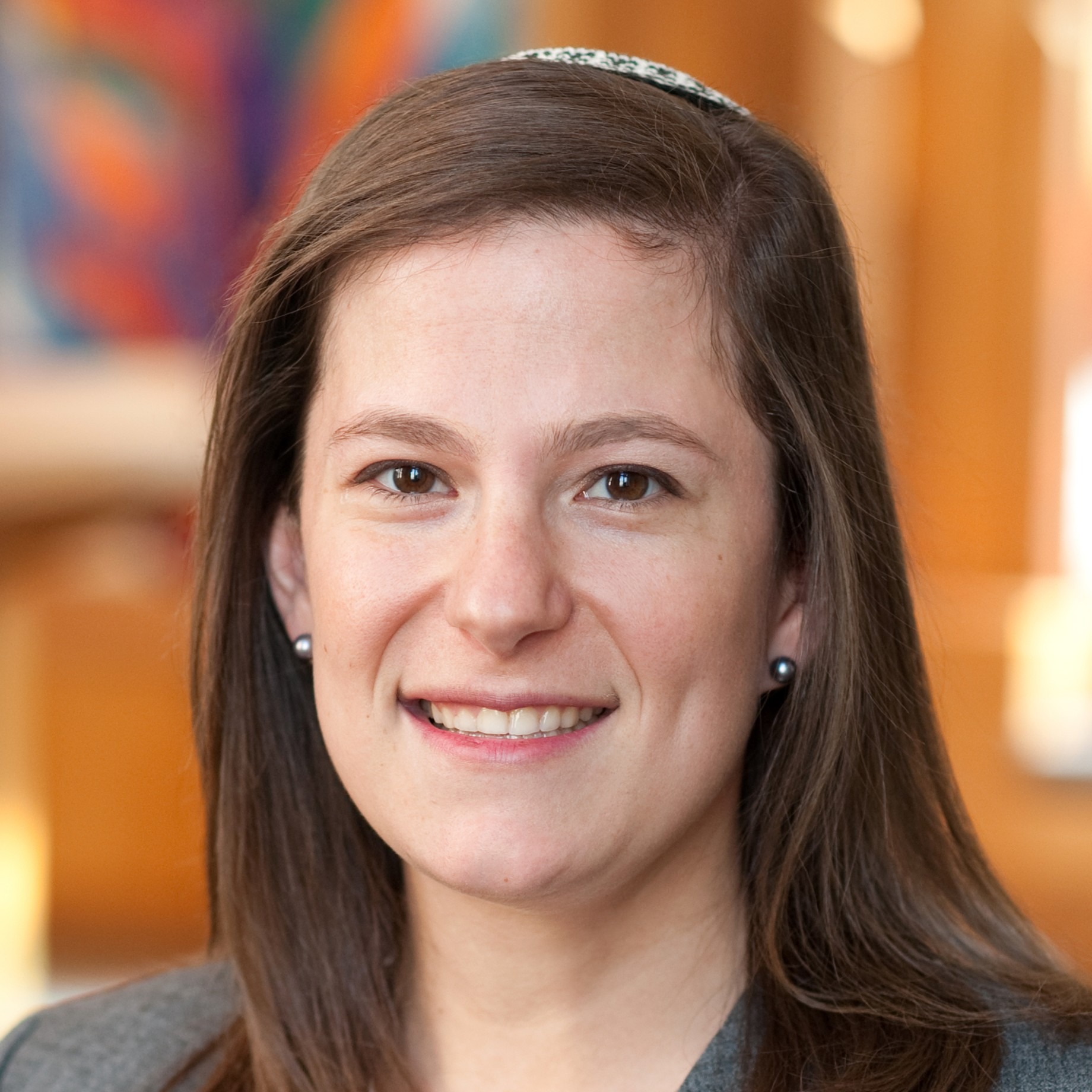
Rabbi Chorny doesn’t only lead Reinventing Ritual, she also works as a cantor at a congregation in Los Angeles, CA. This means she has an unusual perspective both from within synagogue life and as a service provider for those outside of Jewish institutions. She benefits from the pastoral training, rich Jewish education, and ritual aesthetic sensibility and is able to translate this into contexts that would not seek out a congregational leader.
Where do they struggle in their approach to innovation?
Reinventing Ritual is a relatively modest project in terms of scale—working with dozens of clients each year (though the digital resources reach a wider audience). And it stands as an example of the ways in which clergy who feel called to create and serve those outside the walls of the established community, still depend on a traditional congregation for their salary and health insurance. One Jewish foundation has recently invested in an as-yet unnamed digital platform humorously referred to as ‘task Rabbi’ that will facilitate the ritual-leader-for-hire model that Chorny has demonstrated a desire for. Naturally, weddings and funerals may be the most popular ritual moments for which people will seek out this kind of service, but there could be demand for rituals for other life transitions as well.
3. Homecoming

What is it?
Many spiritual innovators work totally outside religious traditions.One such innovator, Yuriy Blokhin, has built a for-profit tech-platform called Homecoming. The platform is based in Canada but works internationally to help integrate psychedelics into the fabric of modern healthcare.
At its core, Homecoming is a software platform built specifically for the practitioners and organizations providing psychedelic-assisted care. Founded in 2021, it serves the growing system of psilocybin service centers, ketamine clinics, ibogaine treatment centers, retreat operators, and integration coaches who are navigating a newly legal and still largely unregulated therapeutic landscape.
Homecoming's clients span what it calls the "medical-mystical spectrum"—from Oregon's regulated psilocybin service centers, to retreat centers in Jamaica and Mexico, to faith communities experimenting with psychedelic-assisted pastoral care. The platform has taken the North Star Ethics Pledge and given 10% of its equity to nonprofit partners in the field, signaling an intention to be a values-anchored participant in the emergence of a new healing modality rather than simply a vendor to it.
Where does it demonstrate excellence in innovation?
Psychedelic care is, at its best, a profoundly spiritual practice, rooted in particular lineages of wisdom and practice from the Amazon basic. The use of psychedelics can frequently produce experiences that researchers describe as mystical: ego dissolution, encounters with something beyond the self, and the acquisition of knowledge that feels, to the person having it, irreducibly real. Yet the administrative scaffolding around these peak experiences, including pre- and post- experience integration, safety regulations, tracking adverse effects, and long-term community care, are often cobbled together.
Homecoming recognized that the integrity of transformative experiences depends significantly on the pre- and post-peak experience care. Are individuals able to meet and debrief their experience with a trusted, trained guide? And when negative experiences happen, who is there to navigate this responsibly with the person taking the medicine? Homecoming has designed technology to assist providers with readiness screenings to assess whether someone is in a fit state to undergo the experience, helping each person to set an intention before they take the drug, and to support post-experience integration to help both providers and individuals in the longer-term.

What stands out in their approach to innovation?
Homecoming’s inclusion of churches among its clients illustrates its commitment to maintain a spiritual center to the work of psychedelics-assisted transformation. In a moment where increased legality and regulation is moving the field towards a medical model, maintaining a commitment to support retreat centers and spiritual communities points to a desire to stay rooted in tradition—as well as being open to innovation.
Where do they struggle in their approach to innovation?
Homecoming's fate is tightly coupled to the regulatory trajectory of psychedelic medicine—a landscape that, while expanding, remains fragile. In the US, if states move to restrict legal access, or if a high-profile harm event generates political backlash, the ecosystem Homecoming serves could contract quickly.
There is also a deeper tension in what Homecoming is trying to do. By reducing the administrative friction of psychedelic practice, the platform makes it easier to operate at scale—but the spiritual efficacy of this work has historically depended on the quality of individual relationships and the irreducible human presence of a skilled guide. Homecoming provides the digital tools to make care more efficient, but it does not provide training for guides, for example. There will need to be consistent care shown to counter the pressures for scale and efficiency that the market dictates.
4. St. Lydia’s

What is it?
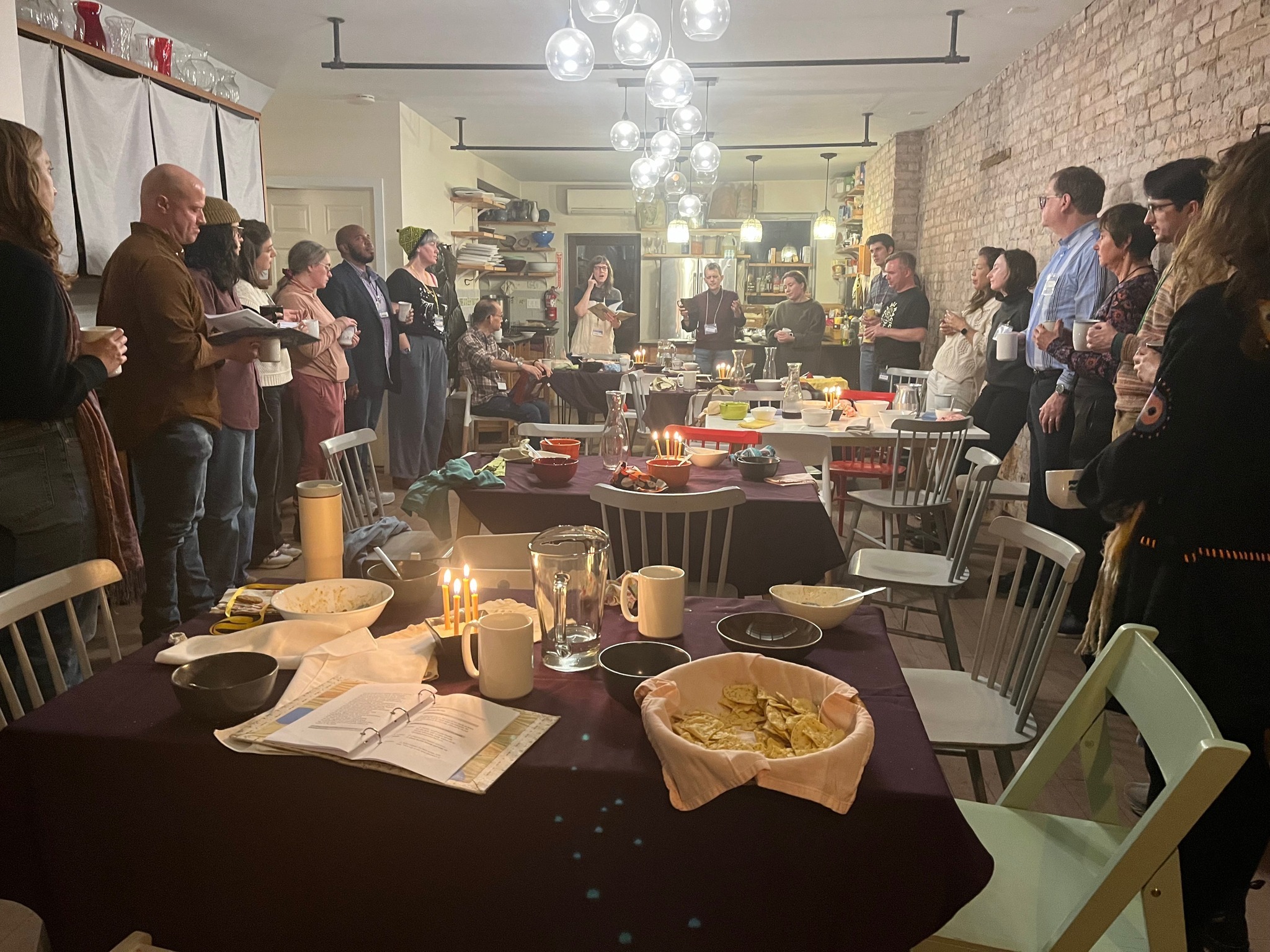
St. Lydia's is a progressive, LGBTQ-affirming congregation in the Gowanus neighborhood of Brooklyn, New York, founded in 2008 by Pastor Emily Scott and a small group of congregants. At St. Lydia's, worship takes place at the table around a home-cooked meal that the congregation prepares together every Sunday evening. Communion isn’t the traditional wafer and sip of wine, but is instead the entire meal the congregation prepares together.
Simple, unaccompanied songs are sung and scripture is discussed rather than preached from a pulpit. The whole evening—from chopping vegetables to drying plates—is understood as liturgy.
Throughout the week, St Lydia’s space also serves as a coworking space and a rental venue to other community groups, which generates an income for the congregation.
Where does it demonstrate excellence in innovation?
The rootedness of St. Lydia’s innovation is what stands out. In the second and third centuries, Christians gathered for sacred meals they called the Eucharist which evolved, over time, into the elaborate worship services we recognize in modern Christian churches. St. Lydia's liturgical practice asks what happens when you return to the original form: a table, a meal, a blessing, and communal life.
The answer, it turns out, is a form of worship with a remarkable capacity to reach people who have given up on church. St. Lydia’s has appealed particularly among LGBTQ+ Christians or those who feel harmed by the institutional church. It has also appealed to those feeling lost or lonely in the context of a large city.
The dinner church format dissolves the barriers that keep many at a distance—the hierarchy of authority is flattened and the liturgy is designed for multiple modes of interaction and various opportunities for conversation.
What stands out in their approach to innovation?
The approach to music stands out. St. Lydia's congregants sing unaccompanied or accompanied only by a shruti box—a small Indian drone instrument that supports the voice without overwhelming it. Plus, its repertoire is built from short, participatory songs designed to be learned and sung by everyone without prior musical training. This approach draws directly on the work of Music That Makes Community, which has developed and curated a body of simple, call-and-echo songs for exactly this kind of intimate worship context. The songs are not performed for a congregation but are simple enough so that everyone can participate.
Where do they struggle in their approach to innovation?
The relationship between St. Lydia’s as a congregation and the denominational body it sits within, the Evangelical Lutheran Church of America (ELCA), has always been an unusual one. St. Lydia’s is distinct from the congregations that the ELCA is used to serving—and so much of the support from denominational executives depended on strong personal relationships and mutual understanding. However, after fifteen years, the leaders of both the ELCA and St. Lydia’s have changed numerous times, and the link between denomination and congregation has become strained. St. Lydia’s is no longer a model of something new and exciting, nor has it grown beyond its original scale. Will the denomination continue to shift its standard practices to make space for a non-traditional faith community? Will the small congregation find enough value to continue its association with the ELCA—especially as the Bishop’s staff decides on the community’s pastoral leadership? Time will tell.
Further Reading
Méndez-Montoya, Angel F. The Theology of Food: Eating and the Eucharist. John Wiley & Sons, 2012. https://www.wiley.com/en-us/shop/general-introductory-religion-theology/the-theology-of-food-eating-and-the-eucharist-p-9781118241479.
Richards, William A., 1940- author. Sacred Knowledge: Psychedelics and Religious Experiences. Columbia University Press, 2016. https://cup.columbia.edu/book/sacred-knowledge/9780231174060/.
Wertheimer, Jack. The New American Judaism: How Jews Practice Their Religion Today. Princeton University Press, 2018. https://press.princeton.edu/books/hardcover/9780691181295/the-new-american-judaism.