
Why Accessibility?
This collection of vignettes focuses on those projects and communities that are successfully accessible—by which we mean they are particularly engaged with themes of:
- Justice: The project is designed to meet unmet needs and/or serves those who are underserved, often without financial barriers.
- Trustworthiness: The project offers clear pathways in and out of participation. Leaders and stakeholders are known and accountable to the community.
- Opportunity: The project is meaningful to people at a range of skill and commitment levels, offering pathways for growth in participation and leadership.
We believe the best innovations are accessible—even when they maintain a clear focus on their mission. As one community leader put it, "We aren't for everyone, but we are for anyone." These vignettes offer four different perspectives on excellence in accessibility.
1. Equal Justice Initiative

What is it?
The Equal Justice Initiative (EJI) was created in 1989 in Montgomery, Alabama—a city once home to one of the largest slave markets in the United States. Founded by Bryan Stevenson, the lawyer whose memoir Just Mercy documents his tireless work against wrongful convictions, mass incarceration and the death penalty, EJI has expanded beyond its original legal work to take on public education work to change the narrative about race in America.
Although they produce excellent digital and printed materials, at the heart of their education program are three sites for visitors in Montgomery: the Legacy Museum, the National Memorial for Peace and Justice, and the Freedom Monument Sculpture Park.
The Legacy Museum, built in 2018, sits on the site of a cotton warehouse where enslaved Black people were forced to labor. It traces the continuous arc from the transatlantic slave trade through the domestic slave market, Reconstruction's collapse, the era of racial terror lynchings, the Great Migration, the Civil Rights movement, and the mass incarceration crisis of the present day. This story is told through interactive exhibits, data visualizations, art, and, above all, first-person narratives. Bus loads of school children and church groups move through the museum alongside families and individual visitors, many of whom are visibly moved by the painful history.
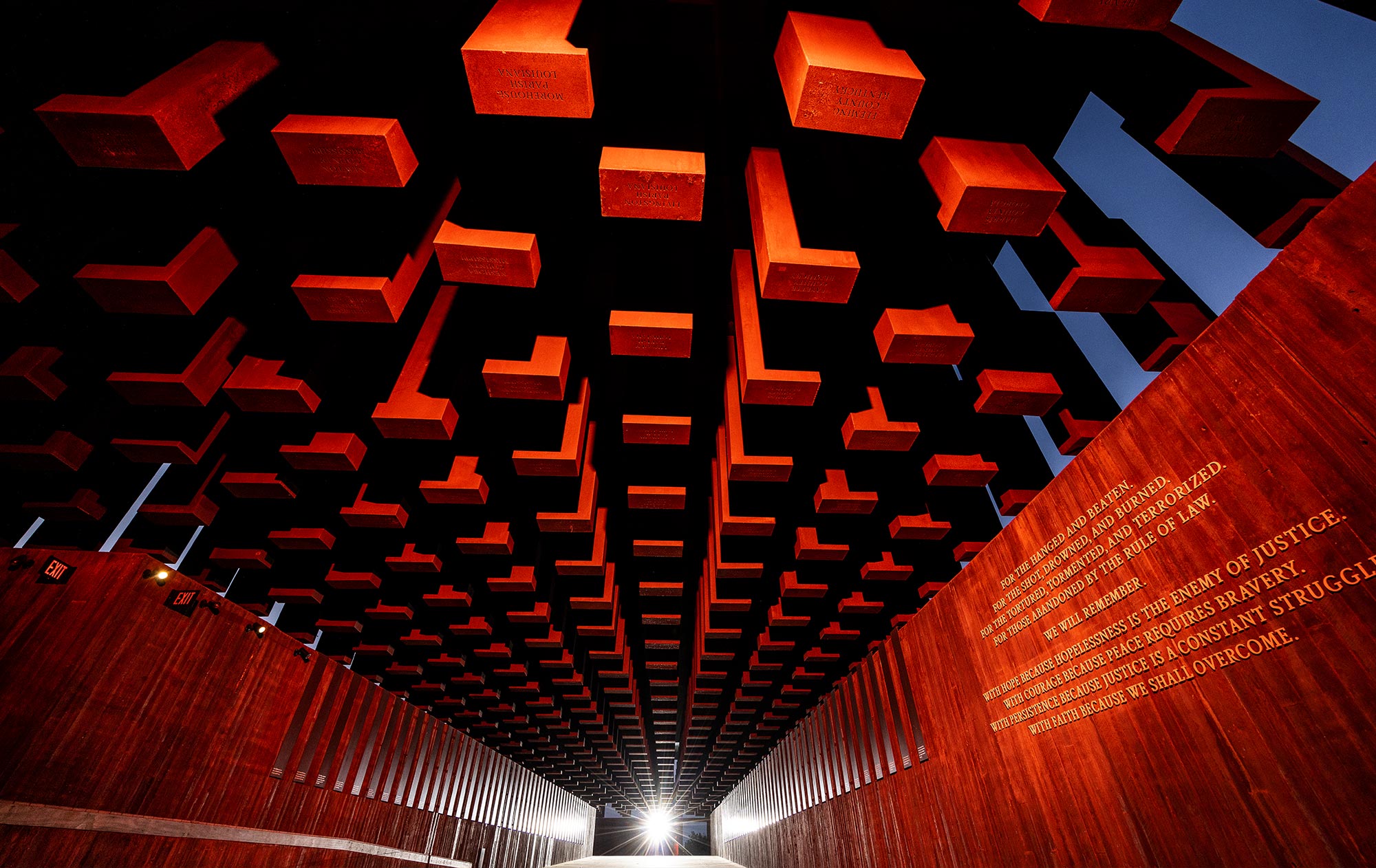
A short distance away and opened in the same year, the National Memorial for Peace and Justice holds 800 weathered steel columns, one for each county where a documented lynching took place between 1877 and 1950. The columns hang from the roof so that visitors moving through the space find themselves surrounded by what can only be described as strange fruit. A newer third site built in 2024, the Freedom Monument Sculpture Park, sits along the Alabama River, and honors the lives and memories of the 10 million Black people who were enslaved in America.
The Legacy Sites offer one of the most powerful examples of spiritual innovation in contemporary America because they do the work that healthy religious communities have always done at their best: they gather people into a story larger than themselves, demand a reckoning with inherited sin, and invite the kind of grief that makes transformation possible.
Where does it demonstrate excellence in accessibility?
The Legacy Sites are, at their core, an act of narrative strategy. Stevenson learned in the courtroom that he had to undo the prejudice of predominantly white juries time and again, and that changing minds requires first changing the stories they held. The museum is one of the most comprehensive institutional attempts in the United States to tell the full, unbroken story of the systemic oppression of Black people in America—from the abduction of nearly thirteen million African people trafficked across the Atlantic, through the terror that dismantled Reconstruction, to the racially unjust policies that shape who is imprisoned today. Importantly, it simultaneously lifts up the stories of resilience, strength, and healing, too.
What makes the storytelling extraordinary is its interactive, participative nature. The National Memorial for Peace and Justice, or the lynching memorial, as it is often known, is particularly effective. Because visitors arrive with the first few columns standing upright, they seem like figures, at first—human-sized. It is only when visitors walk on, and the path slopes down, that suddenly these memorial columns start to hang, until one is surrounded by hundreds, hanging from the roof.
In the museum, data exhibits make the scale of the violence legible. First-person accounts break down the barriers between history and the here-and-now. In an interview, Stevenson made an explicit contrast with post WWII Germany, where decades of public education mean the Holocaust Memorial in Berlin can stand without explanation. In the United States, he noted, context is still necessary—the history of lynchings remains too little understood by white Americans to be presented without narrative. The challenge is significant, but, he explained, "If we can do it in the heart of Montgomery, Alabama," he told Sacred Design Lab, "we can do it everywhere."
What stands out in their approach to accessibility?
The Legacy Sites represent a form of accessibility that insists that a history long rendered inaccessible—suppressed, minimized, or simply never taught—be made available and legible. For Black Americans, whose family histories have been severed, whose ancestors were enslaved, abused, and murdered, and whose experiences have been systematically excluded from national monuments and civic memory, these sites are among the first in the country to place that experience at the center rather than the margin. This is often a profound experience of both pain and healing; a process of truth-telling and discovery, and also one of meaning-making and integration. For example, at the lynching memorial, each column bears the name of a county, and visitors are invited to search for their own—connecting visitors' own locality to the memorial.
EJI has also developed a remarkable range of tools for reaching beyond the sites themselves: a daily History of Racial Injustice calendar, published online; documentary films; research reports on lynching, slavery, and mass incarceration that have been cited in courtrooms and classrooms; and the Community Remembrance Project, which works with local communities across the country to research and memorialize racial terror lynchings in their own counties, often in partnership with people who are themselves descended from victims or perpetrators. Stevenson's framing of this work as a "covenant of hope—with the ten million enslaved people who believed in a future they could not see" gives the accessibility of this history a spiritual as well as a civic dimension. He insists that getting the story right is not merely educational; it is an act of faithfulness to those who could not tell it themselves.
Where do they struggle in their approach to accessibility?
The deeper challenge for EJI is not to reach those who make the journey to Montgomery. Those visitors have already chosen to engage, of course. What’s trickier is finding ways to bring this lesser-understood history into the spaces where it is least welcome and therefore perhaps most needed. While a museum can tell a story with extraordinary power to those who walk through its doors, it can’t compel anyone to walk through them. Stevenson's narrative gifts were honed in courtrooms where he had no choice but to face resistant audiences, but the Legacy Sites, for all their ambition, depend on voluntary pilgrimage. The people most in need of moral formation around America's painful history of racism are the least likely to book the trip.
2. L'Arche

What is it?
L'Arche is a global network of intentional communities in which people with and without intellectual disabilities share daily life together. Founded in 1964 by Jean Vanier in a village in northern France, it began with Vanier inviting two men with intellectual disabilities who had formerly lived in an institution to live with him in a small house. From that act of radical hospitality, a movement has grown that now encompasses 160 communities across 37 countries on five continents, with approximately 5,700 members with disabilities living alongside 6,000 team members and an additional 5,800 volunteers.
L'Arche's mission is to make known the gifts of people with intellectual disabilities through what it calls "mutually transforming relationships." Both volunteers and staff learn from those with intellectual disabilities—their openness to love and expressions of need, their joy, their vulnerability and compassion. The L'Arche movement is built on the premise that the encounter between people with and without intellectual disabilities transforms everyone involved. At the center of each community may be a shared home, a vocational workshop, a social program, or a public engagement initiative. Though anchored in the Catholic tradition at its founding, L'Arche is now multi-religious in its membership, and the spiritual heart of the work finds expression in many practices, languages, and theologies.
Where does it demonstrate excellence in accessibility?
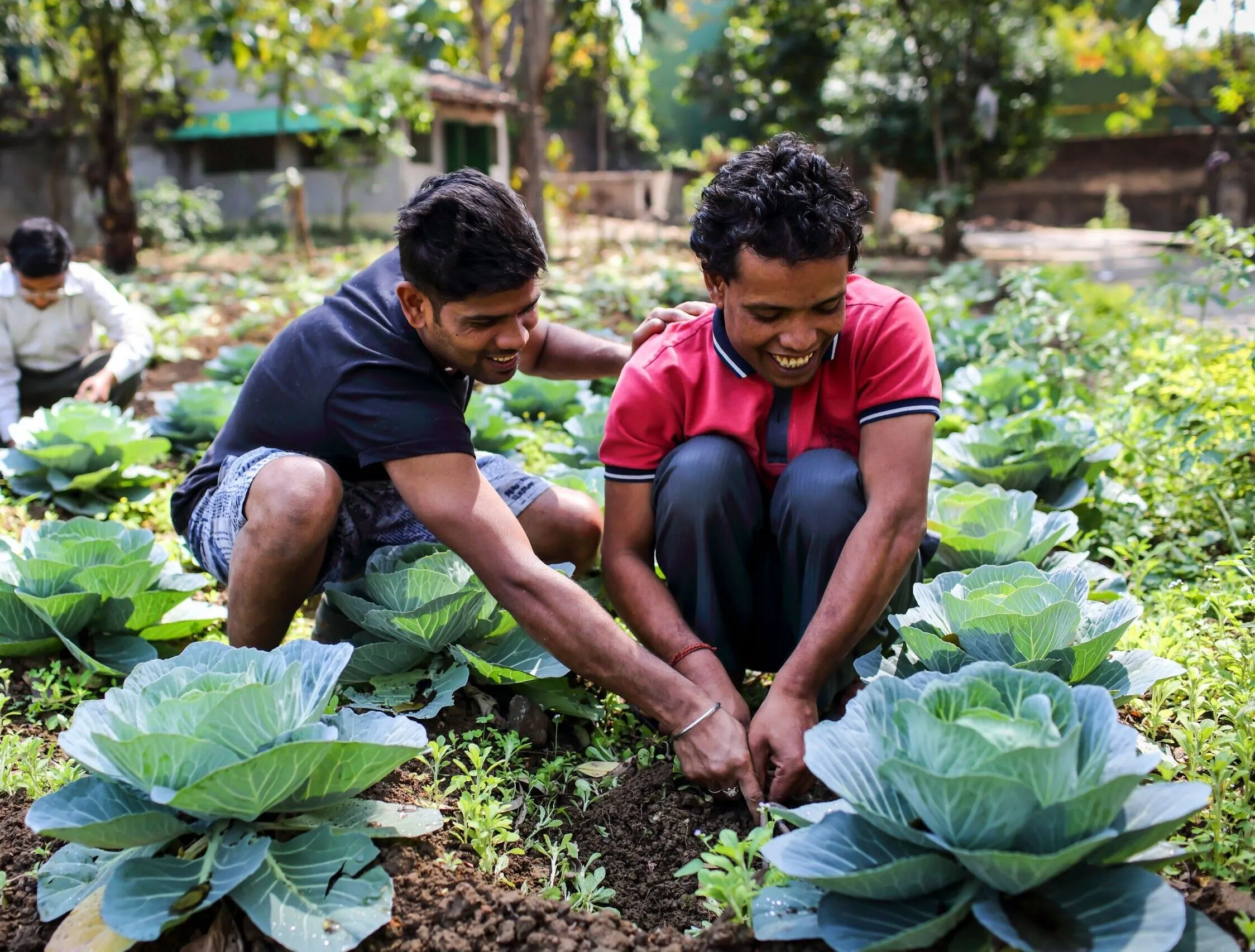
L'Arche's most radical contribution on the theme of accessibility is its insistence that people with intellectual disabilities are not merely recipients of inclusion but agents of it. In a world that routinely segregates, warehouses, and renders invisible those with intellectual disabilities, L'Arche has built communities in which people cook, celebrate, sing, and shape the shared rhythm of life of the communities they inhabit. The movement expresses this in their identity statement: "We celebrate the unique value of every person and recognise our interdependence" and this is lived out in daily living—in the laying of the table, baking bread, and watering flowers in the garden.
This commitment to full participation extends to advocacy. L'Arche participated in the UN's Conference of States Parties on Disability Rights in June 2026, and its members with disabilities have won legal rights, given public testimony, and appeared before national governments.
What stands out in their approach to accessibility?
L'Arche is unusually clear about what it offers and to whom, and particularly attentive to the different ways people can belong to it. Entry into community life is open to people with and without intellectual disabilities, and the organization maintains distinct pathways for short-term volunteers, longer-term team members, and people considering deeper commitment so the community remains both stable and porous to new life. Many L'Arche leaders spend decades living alongside one another and those with intellectual disabilities, forming a deep well of institutional expertise and providing many newcomers with opportunities to learn.
Further, leadership actively includes those L'Arche strives to serve. Governance structures include people with disabilities in decision-making roles rather than treating leadership as the exclusive province of those without them.
Where do they struggle in their approach to accessibility?
In 2020, following multiple testimonies from survivors, L'Arche commissioned an independent investigation into its founders, Jean Vanier and the Dominican priest Thomas Philippe, who had been Vanier's spiritual mentor and the co-architect of L'Arche's founding ethos. The report, produced by a multidisciplinary team over two years and published in full in 2023, documented a sustained pattern of sexual abuse by both men, carried out under the cover of spiritual direction against adult women in their communities over several decades. (No evidence of harm against people with disabilities was found.) The investigation concluded that these were not isolated acts but part of a systemic pattern. The very closeness and trust that made L'Arche communities transformative had also, in Vanier's hands, been instruments of harm.
Communities built on vulnerability and mutual trust depend above all on the integrity of those who hold authority within them. As Vanier had already died by the time the report was commissioned, the remaining avenue for L'Arche has been to respond with total transparency: publishing the full report, restructuring its governance, and investing in safeguarding systems designed to ensure that accountability is structural rather than personal. Whether these reforms are sufficient, and whether a spiritual vision so bound up in one man's charisma and authority can be genuinely redistributed across a global community, is a question L'Arche is still working to answer.
3. New City Church
What is it?
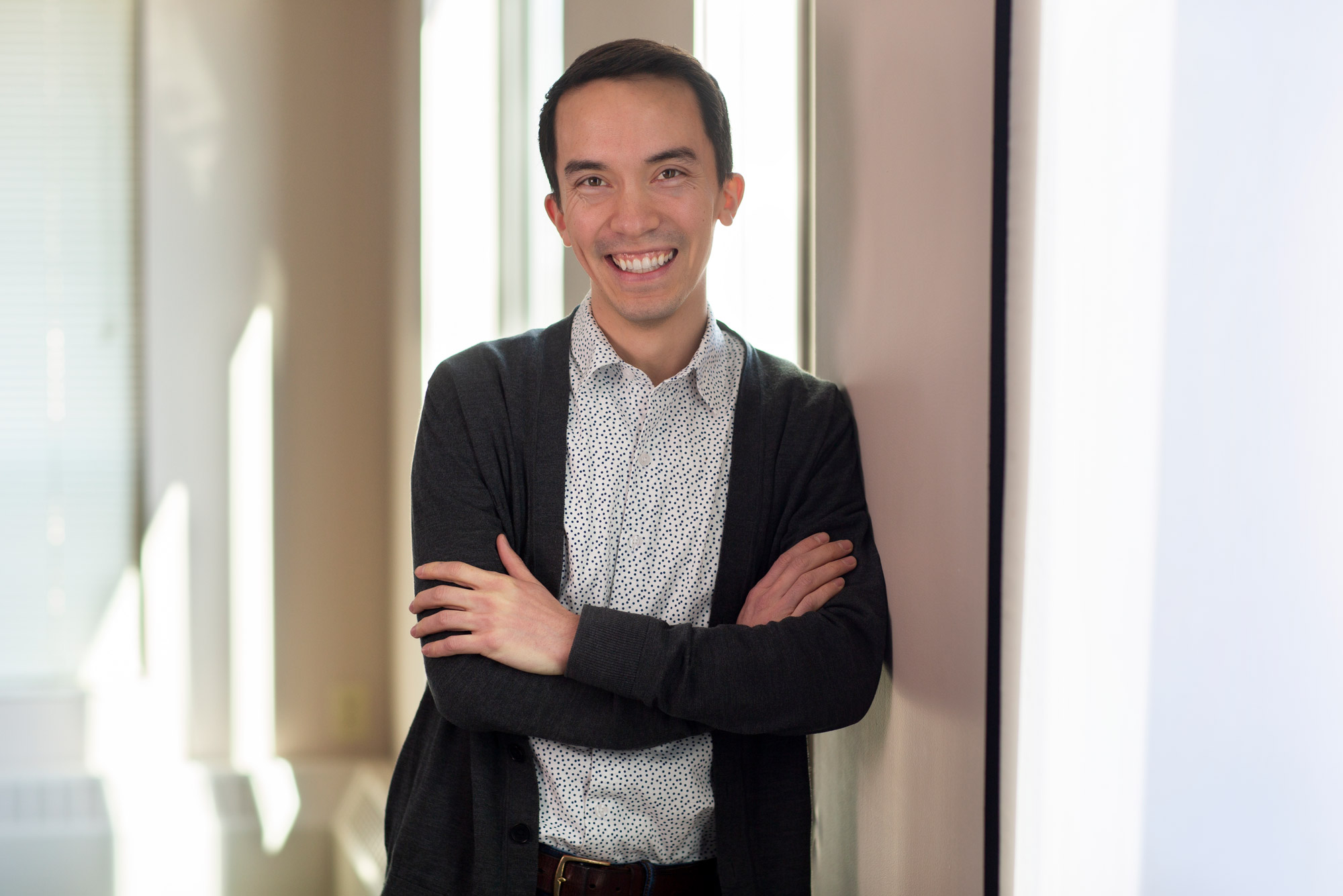
New City Church began in 2015 in Methodist minister Tyler Sit's living room. As his community in Minneapolis, Minnesota began to grow, Sit rented space from a local congregation. The established church had an older flock and was dwindling, so as they saw the young, racially diverse community make its home in their building, they decided to donate the space to New City Church. Within a decade, New City launched a second church campus in northeast Minneapolis.
Consistent with its name—a reference to Revelation 21's emphasis on the "new city" where all tribes are welcome, New City Church is grounded in a commitment to justice through inclusive community. This commitment has resulted in a multiracial, multiethnic, and sexually diverse congregation. At one count, around half of the church was openly LGBTQ, more than one-third of attendees didn't actively identify as Christian, and the church's ethno-racial demographics mirrored those of its city.
True to Revelation 21's description of a "new city" where the whole earth is renewed, New City Church is also deeply committed to issues of economic and environmental justice. Sit describes the church as a community designed to "create inward renewal for changemakers." His own identity informs this work: "As a queer person of color who is living on this planet, when I wake up I don't get to choose if I'm Asian today, or whether I'm gay, or whether I breathe air. I am all of those things, all of the time, and I strive for justice in all of those areas because my survival depends on it."
Where does it demonstrate excellence in accessibility?
New City's location remains a site of worship for the building's original occupants. As Sit indicates, this shared arrangement is unusual: "Usually, the pattern is that a church closes and then they kind of yield their building to another congregation, out of desperation. Something that feels special about this is we'll continue to be in community with [the older congregation] and continue to share space."
The building also provides space for community organizations, including Southside Harm Reduction Services and Kaleidoscope Healing Arts. For Sit, the church building is a place for developing "broad and deep networks," where "healers, activists, organizers, clergy, people of faith can all be convening together" to strengthen neighborhood resilience and power. As he explains, it's a building that—like New City Church, itself—"is intentionally supposed to be useful to the folks who need it the most in the neighborhood."
Yet, accessibility at New City Church extends beyond physical access. By sharing space, cultivating partnerships, and intentionally serving those most affected by inequality, it lowers barriers to participation and creates opportunities for community leadership and collective action.
What stands out in their approach to accessibility?
With its place-based focus on justice, New City Church stands out for its creative efforts to connect immediate lacks to their structural causes. For instance, New City supports a network of backyard micro-farms, providing agricultural education while helping residents meet food needs. The farms also create economic opportunity, as harvests can be sold to help families make rent.
Likewise, New City staff track legislation and government policy affecting their neighborhoods. This allows them to influence local development efforts while engaging in community education and organizing in a rapidly gentrifying urban context.
New City Church's anti-racism work also reflects this micro/macro approach. From co-leading an online prayer vigil after George Floyd was killed by police nearby to creating a solidarity fund supporting community organizations and microloans for struggling neighbors, the church addresses local crises without losing sight of long-term social change.
For Sit, reconciliation—or the "confessing, transforming, and reconciling our wrongdoing"—is central to New City Church. "We can be honest and hopeful only if we are connected to a community committed to making things better," he said. That commitment also shapes who is equipped to lead. Alongside traditional worship services, New City Church offers Transformational Organizer Training. "It's not enough for a church to talk about how things should be," Sit explains. "We need to give people the skills to make change."
Where do they struggle in their approach to accessibility?
New City Church's focus on environmental justice has the potential to unite diverse communities; Sit acknowledges that its framing can unintentionally alienate some audiences: "I used to call this an 'eco-church,' and then I did a focus conversation with some African-Americans, and they said, 'Eco-church sounds like a white, expensive thing—it sounds like I am paying more for something I don't care about.' So I permanently dropped the name of 'eco-church.'"
Similarly, accusations of gentrification can follow efforts to plant churches and revitalize urban communities. In response, Sit draws on scripture—including Revelation 21 and Isaiah 65—to challenge the excesses of urban renewal: "Certainly nobody minds the benefits that come with gentrification, such as extra lights illuminating the street or the influx of community events. However, for New City Church—our focus isn't on whether gentrification is right or wrong, but rather, how we can live out the Gospel when some of our neighbors can't afford to live here anymore."
Finally, although New City Church's first weekly service was in 2017, no one—including Sit—was employed full time. The budget has grown since then, but staffing and finances remain ongoing challenges to sustaining the church's inclusive and justice-oriented mission.
4. Recovery Café
What is it?
Recovery Café Network is a movement of healing communities offering free membership and peer support to people recovering from addiction, trauma, and anything that blocks their capacity to love and be loved. The first Recovery Café was founded in Seattle in 2004 by Killian Noe, and from that single storefront, Noe and her colleagues developed a replicable model that has now grown to over one hundred cafés across North America.
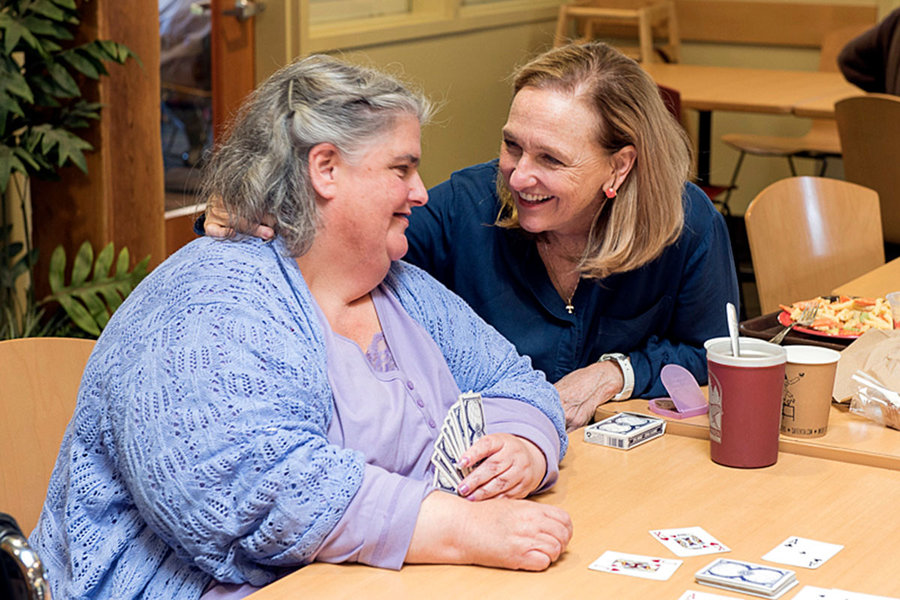
The model rests on three interlocking commitments: radical hospitality, loving accountability, and a culture of contribution. Anyone may walk through the door of a Recovery Café, and membership is free. But, crucially, members have to agree to three things: first, to be drug and alcohol free in the space; second, to contribute to the community; and, third, to attend a weekly Recovery Circle. These small, facilitated support groups are the heart of Recovery Café's model. They are spaces where participants are known, loved, and held to be their best selves. In small groups, the community commits to practicing the Guiding Principles: connect with divine love, show respect, cultivate compassion, practice forgiveness, encourage growth, and to give back to others.
Where does it demonstrate excellence in accessibility?
In a landscape where addiction treatment is expensive, shame-laden, and gatekept by insurance systems, waiting lists, and clinical assessment, Recovery Café keeps a deliberately low threshold, designing for people for whom most institutions have already failed. Many are living with addiction, homelessness, trauma, and mental illness, often in combination, often without resources, often without anyone in their lives who believes recovery is possible for them.
The co-founder of Recovery Café in Washington, DC, Jacqueline Conerly, puts it plainly: "If you've lived life, somewhere you've encountered something you need to overcome. Our space is a space where everybody's embraced, everybody's welcome." That welcome is not conditional on progress, sobriety history, housing status, or any other marker of having already begun to get better.
The justice claim goes deeper than open doors, however. Recovery Café operates from the conviction that addiction thrives in isolation and recovery happens in community. The communities most likely to enable recovery are those that cross, rather than reinforce, the divides of race, class, religion, and circumstance. Founder Killian Noe explains, "we believe that real relationships with those whose realities are different from our own—relationships that cross socio-economic, racial, religious, political, and other divides—are what change us and ultimately change our world." It's both a strategic and a spiritual commitment to connection as a path to recovery.
What stands out in their approach to accessibility?
Recovery Café's accountability structures are unusually transparent and mutual. For example, Noe herself maintains her own circle of loving accountability, as do all leaders and facilitators across the network. The people who hold others are also held. This undoes some of the dynamics of helper and helped that so often undermines the best intentions of mutuality.
Where do they struggle in their approach to accessibility?
The network model for Recovery Café means that each community has the ability to shape their work to a significant degree. Building and sustaining more than one hundred communities means that the quality of that experience can be uneven across a network. The model depends on the slow, relational work of forming facilitators and cultivating community culture, and that work cannot be standardized or accelerated without losing what makes it effective. As the Network continues to grow, the tension between the reach and the depth that the model demands will only intensify.
Further Reading
Burghardt, Madeline. "On Care and Violence: Reflections on L'Arche in the Wake of the Jean Vanier Abuse Revelations." Disability Studies Quarterly 44, no. 3 (2025). https://doi.org/10.18061/dsq.v44i3.7658.
Cameron, Christopher, and Phillip Luke Sinitiere, eds. Race, Religion, & Black Lives Matter: Essays on a Moment and a Movement. Vanderbilt University Press, 2021.
Cole, Tim. "Spaces of Memory, Scales of Memory: The Equal Justice Initiative's Marking of Lynching from Montgomery to Montevallo and beyond, 2015–2025." Journal of Historical Geography 91 (April 2026): 153–67. https://doi.org/10.1016/j.jhg.2025.12.003.
Cone, James. A Black Theology of Liberation, 50th Anniversary Edition. Orbis Books, 2020.
Evans, Tony. A Survey of the Black Church in America: Exploring Its History, Ministry, and Unique Strengths. Moody Publishers, 2024.
Gates, Henry Louis, Jr. The Black Church: This Is Our Story, This Is Our Song. Penguin Books, 2022.
Gaventa, William C. Disability and Spirituality: Recovering Wholeness. Baylor University Press, 2018. https://search.library.wisc.edu/catalog/9914477833402121.
Glyn, Justin. "Darkness in the Forest: Revisiting L'Arche after Jean Vanier." Eureka Street 33, no. 2 (2023): 23–24. https://www.eurekastreet.com.au/darkness-in-the-forest-revisiting-larche-after-jean-vanier.
Humphreys, Keith. Circles of Recovery: Self-Help Organizations for Addictions. Cambridge University Press, 2011.
Kerr, Lisa. "How to End Mass Imprisonment: The Legal and Cultural Strategies of Bryan Stevenson." University of Toronto Law Journal 67, no. 1 (2017): 104–23. https://doi.org/10.3138/UTLJ.2016R3.
Martin-Schramm, James B. Christian Environmental Ethics: A Case Method Approach. Orbis Books, 2003.
Spink, Kathryn. The Miracle, the Message, the Story: Jean Vanier and L'Arche. Paulist Press, 2006.
The Faith in Action Writing Collective. Faith in Action: A Handbook for Activists Advocates and Allies. Fortress Press, 2017. https://search.library.wisc.edu/catalog/9912914769502121